
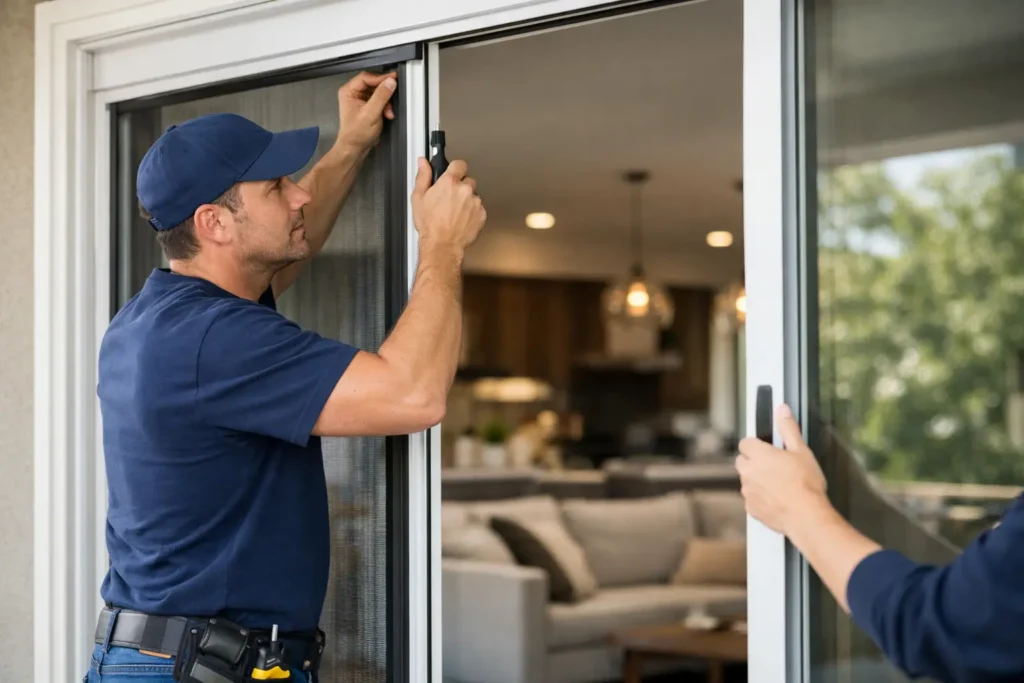
A patio door should let in the breeze without letting in mosquitoes, no-see-ums, leaves, or a screen panel that blocks the view when you do not need it. Professional retractable screen door installation gives South Florida homeowners a clean, low-profile way to enjoy fresh air at sliding glass doors, French doors, lanais, and other wide openings.
Unlike a traditional sliding screen door, a retractable screen disappears into a slim housing when it is not in use. That makes it a strong option for homes where appearance, clear sightlines, and easy access to the patio matter just as much as pest control. The result depends on more than the screen itself, though. Accurate measurements, a secure frame, smooth track alignment, and the right product for the opening all determine whether the screen works reliably every day.
Why Retractable Screens Make Sense in South Florida
Florida patios get used year-round. A retractable screen can make the transition between air-conditioned indoor space and outdoor living feel easier, especially during cooler mornings, evenings, and the months when opening the slider is actually comfortable.
The main benefit is convenience. Pull the screen across when you want airflow and insect protection, then let it retract neatly into its cassette when you want an open doorway. There is no bulky panel parked in front of the glass and no need to remove a screen seasonally.
They are also useful where a standard screen door is not practical. Some openings are extra wide, have French doors that swing outward, or are located beside pool decks and patios where homeowners want a less visible solution. For larger openings, motorized retractable screens can provide shade, privacy, and insect control with the push of a button.
That said, retractable screens are not automatically the best choice for every door. A traditional sliding screen may be a better fit when a homeowner needs the most economical repair, has an existing screen frame in good condition, or wants a screen that can take frequent impact from children or pets. The right recommendation starts with the door opening, how the space is used, and the condition of the existing frame and tracks.
What Retractable Screen Door Installation Requires
A retractable screen looks simple once it is in place, but its installation is precise. The screen housing mounts vertically at one side of the opening. A pull bar travels across the doorway and connects to a magnetic or mechanical latch on the opposite side. Top and bottom guides keep the screen centered and prevent the mesh from blowing loose in normal breezes.
For dependable operation, the installer must first confirm that the mounting surfaces are solid, straight, and deep enough for the selected system. Patio doors and exterior openings often have trim, thresholds, uneven stucco, handles, locks, or other details that affect clearance. A screen can be high quality and still perform poorly if the housing is installed on an out-of-square surface.
Measurements matter at several points, not just width and height. The installer checks for variations from the top to the bottom of the opening, the depth available for the cassette, the condition of the sill, and whether the pull bar will clear the patio door handle. On sliding glass doors, operation of the actual door must remain smooth and unobstructed after the screen is installed.
A clean installation also includes properly secured fasteners, neatly fitted tracks, and adjustments that let the screen retract with controlled tension. If the tension is too loose, the mesh may sag or fail to close fully. If it is too tight, the pull bar can be difficult to use and the internal spring system may wear sooner than it should.
The Door and Frame Need Attention First
A retractable screen cannot correct problems with the door behind it. If the sliding patio door drags, jumps on damaged tracks, or has loose handles and worn locks, those issues should be addressed before adding a screen system.
This is especially relevant in older South Florida homes, where salt air, humidity, sand, and daily use can wear down rollers and tracks. A door that does not glide easily makes every trip outside more frustrating, even with a new screen installed. Replacing worn rollers with quality stainless-steel precision ball-bearing rollers and repairing damaged tracks can restore smooth movement before the screen work begins.
The same principle applies to security. A retractable screen is designed for airflow and insect protection, not as a substitute for a properly functioning patio door lock. If the slider lock is weak or unreliable, a double-bolt lock upgrade may be worth considering as part of the overall project.
Choosing the Right Screen for Your Opening
Retractable screen systems are available in different sizes, mesh types, colors, and operation styles. The best choice is based on the opening and the job the screen needs to do.
For a standard single patio door opening, a manually operated screen is often a practical, cost-conscious option. It keeps insects out and stores away when not needed. For French doors, a paired system may be installed so each screen pulls toward the center and latches cleanly.
Wide patio openings, outdoor kitchens, covered porches, and lanai spaces may call for a larger manual system or a motorized screen. Motorized screens are especially useful where the opening is too wide for convenient hand operation or where homeowners want to control sun glare, privacy, and bugs from one system. They cost more than a basic door screen, but they can add real value to an outdoor living area that gets daily use.
Mesh selection also matters. Standard insect mesh offers airflow and visibility, while tighter mesh helps with smaller insects that are common near water or landscaping. Pet-resistant mesh can be a smart upgrade for homes where dogs press against screens or run through doorways. Darker mesh generally provides a clearer outward view, while some specialty fabrics prioritize solar shade or daytime privacy.
No mesh is indestructible. Retractable screens are spring-tensioned products with moving parts, so they should be operated by the pull bar rather than grabbed by the mesh. Homes with very active pets or young children may need a screen choice that balances appearance with durability.
Common Installation Mistakes to Avoid
The most common problems are not usually caused by the idea of a retractable screen. They come from selecting the wrong size system, installing it over an uneven surface, or skipping adjustments after mounting.
A screen housing that is not perfectly plumb can cause the pull bar to drift, rub, or leave a gap near the latch. Guides that are not aligned can make the screen bind. Fasteners installed into weak trim rather than solid framing can loosen over time, particularly in humid exterior conditions.
Another mistake is assuming every doorway has enough room for the cassette and tracks. Decorative trim, exterior door handles, impact-door frames, and threshold shapes can limit what will fit. A professional in-home inspection identifies those details before work begins, rather than after a product has been ordered.
It is also wise to think about wind exposure. Retractable door screens are useful for normal daily ventilation, but they should not be left extended in heavy wind, storms, or when the home is vacant. Retracting the screen protects the mesh and hardware, while closing and locking the patio door protects the home.
Care That Keeps a Retractable Screen Working Smoothly
A small amount of routine care helps protect the investment. Keep the lower guide area free of sand, dirt, pet hair, and leaves. Wipe the housing and pull bar with a soft cloth, and rinse the mesh gently if it collects dust or pollen. Avoid harsh chemicals, pressure washing directly on the screen, and oil-based lubricants that can attract grit.
If the screen begins to retract slowly, does not latch, or starts rubbing along the guide, do not force it. The cause may be a simple alignment issue, loose fastener, worn component, or debris in the track. Addressing a minor problem early is usually more affordable than continuing to use a screen that is binding.
For homeowners who are also dealing with hard-to-slide patio doors, torn screen panels, damaged tracks, or unreliable locks, it often makes sense to coordinate the work in one visit. Protech Sliding Doors can inspect the complete opening and recommend repairs or upgrades based on what will provide the best long-term result.
A retractable screen should make stepping outside feel easier, not add another door component to fight with. When the opening is measured carefully, the frame is sound, and the system matches the way your household uses the patio, you can enjoy the breeze and keep the bugs where they belong.