
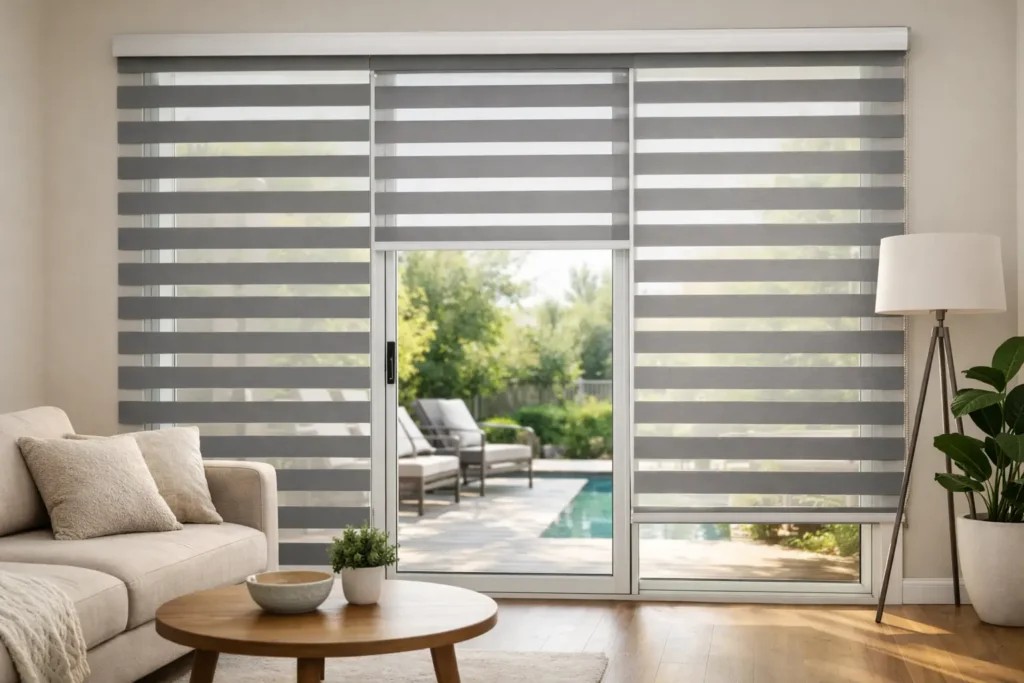
A sliding glass door can bring in the view, daylight, and easy access to the patio, but it can also turn one wall of your home into a source of glare and unwanted visibility. Zebra blinds for sliding glass doors give South Florida homeowners a practical way to control light and privacy without covering the door with heavy drapery or making the room feel closed in.
The right shade should do more than look good. It needs to clear the door handle, operate reliably, stand up to daily use, and suit the wide opening of a patio slider. For homes in Fort Lauderdale, Boca Raton, Pompano Beach, and nearby areas, it should also help manage the strong Florida sun that pours through glass for much of the day.
Why zebra blinds work well on patio sliders
Zebra blinds use alternating sheer and solid fabric bands. When the bands are aligned, light can filter through the sheer sections while the shade still softens the room. Shift the fabric slightly, and the solid bands overlap to create more privacy and block more direct sunlight. Raise the blind completely when you want an open view.
That flexibility is the main advantage. A conventional roller shade is generally either up or down. Vertical blinds can offer directional control, but their vanes may swing, collect dust, or feel dated in a newer living space. Zebra blinds give homeowners a cleaner, more tailored look with several usable levels of light control.
They are especially useful in rooms where the slider faces a pool, patio, lanai, or neighboring property. During the day, you may want filtered light without losing the outdoor view. At night, when interior lights make the glass more transparent from outside, you can close the solid bands for better privacy.
Still, zebra blinds are not the answer for every door. If complete room darkening is the priority, such as in a media room or bedroom, a blackout roller shade or a layered window-treatment plan may be better. Zebra fabrics reduce light significantly when closed, but small light gaps around the sides and between fabric layers can remain depending on the installation.
The biggest decision: one wide shade or multiple shades
Sliding doors are wide, and that changes how the shade should be planned. Homeowners often assume one large blind is the cleanest solution. Visually, it can be. Operationally, however, a single oversized shade may be heavier, have a larger headrail, and require more clearance above the door.
For many standard two-panel sliders, two individually controlled zebra shades are the more practical choice. Each shade can cover one side of the opening, allowing you to raise only the section near the active door panel. That makes it easier to step outside without lifting a full-width treatment every time.
A three-panel or multi-panel door may benefit from three shades, particularly when the opening is very wide. Separate shades also give you better control over sun exposure. If afternoon light hits one side of the room harder than the other, you can adjust that section without darkening the entire space.
The trade-off is that more shades mean more fabric panels, controls, and possible light gaps between units. A professional measurement helps determine where those gaps will fall and whether the layout will look balanced with the door frames.
Consider which panel you use most
Before choosing a configuration, stand at the door and think about your normal routine. Which panel slides open? Where is the handle? Do children, pets, or guests go in and out frequently? Is there furniture near the opening?
A shade that looks excellent on a showroom display can become frustrating if it interferes with the most-used path to the patio. The goal is to make the slider easier to live with, not add another obstacle to a door that already needs to function smoothly.
Mounting zebra blinds for sliding glass doors
Most zebra blinds for sliding glass doors are mounted above the opening, either on the wall or ceiling. This outside-mount approach allows the fabric to cover the glass area and avoids the narrow depth limitations of many sliding door frames.
A wall mount works well when there is enough flat, solid space above the door. A ceiling mount can be a good option when the door sits close to the ceiling, when wall space is limited, or when you want the shade to appear taller and more finished. In either case, the mounting surface must be secure enough to support the headrail and daily operation.
Clearance matters. The headrail should sit high enough that the shade can raise fully without hanging into the doorway. It also needs to be positioned so it does not hit the handle, catch on a lock, or rub against the moving glass panel. These details are easy to miss when measurements are taken only from the width and height of the glass.
For a cleaner appearance and better light control, the shade should extend beyond the glass opening on both sides. Exact coverage depends on trim, wall space, and the door layout. Too narrow, and morning or afternoon sun can slip around the edges. Too wide, and the shade may crowd nearby walls, switches, or window treatments.
Manual or motorized operation?
Manual zebra blinds remain a sensible option for many homeowners. They are straightforward, cost-effective, and work well for smaller or moderately sized door openings. A properly sized manual shade can provide years of convenient daily use.
Motorization becomes more appealing as the opening gets wider, the shade gets heavier, or the door is used frequently. With motorized blinds, you can adjust the shades with a remote, wall control, or compatible home-automation setup. That is particularly convenient for high, wide patio doors, rooms with multiple glass openings, and homeowners who want quick privacy at night without walking across the room.
Motorized shades also make it easier to establish a routine. You can raise them in the morning to enjoy natural light and lower them during the hottest part of the afternoon to reduce glare. The right system depends on power access, preferred controls, and whether you want to integrate the shades with other motorized products in the home.
Motorization costs more upfront, so it should be selected for convenience and everyday use, not simply because it is available. A free in-home estimate can help compare practical options before making that investment.
Fabric, color, and heat control in South Florida
The fabric you choose affects both the look of the room and the way it handles sunlight. Lighter colors usually keep a space feeling open and reflect more visible light. Gray, beige, white, and soft neutral fabrics tend to work well with the bright, coastal-inspired interiors common throughout Southeast Florida.
Darker fabrics can offer a stronger visual contrast and may reduce glare more noticeably, but they can make a room feel more enclosed when the blinds are closed. Pattern and texture should also be considered from both sides of the glass. A shade is visible from the patio as well as from inside the home.
Zebra blinds help manage direct sunlight and soften harsh glare, but they are not a replacement for efficient glass, impact-rated windows, or properly functioning sliding doors. If your slider is difficult to open, has damaged tracks, loose handles, worn rollers, or lock problems, repair those issues first. A beautiful new shade cannot fix a door that drags, sticks, or does not secure properly.
Installation details that protect the finished result
Sliding glass doors move, and nearby window treatments need to respect that movement. During installation, the technician should verify that the blind clears the handle, that the fabric lowers evenly, and that the door can open without rubbing the shade or its controls.
For corded manual models, control placement should be considered carefully, especially in homes with children or pets. Cordless and motorized options can create a cleaner look and reduce hanging hardware near an active doorway. The fabric should also be kept away from moisture-prone areas where wet hands, pool traffic, or an open door during rain can affect the material over time.
Professional measuring is valuable because sliding-door openings are rarely as simple as they appear. Uneven ceilings, decorative trim, recessed headers, alarm contacts, and nearby shutters can all affect the best mounting method. Taking the time to plan the installation helps prevent crooked headrails, exposed gaps, and shades that cannot be raised high enough for comfortable access.
A practical upgrade for privacy and comfort
For homeowners who want a modern alternative to vertical blinds or heavy curtains, zebra shades can make a patio door feel more comfortable and more intentional. They provide daytime filtering, nighttime privacy, and a neat profile that complements a well-maintained sliding glass door.
The best setup depends on the width of the opening, the direction of the sun, the panel you use most, and how much privacy you need after dark. Protech Sliding Doors can assess the door area, recommend a workable configuration, and provide a free estimate for manual or motorized shading options. A properly measured shade should let you enjoy the Florida light on your terms while keeping the path to your patio clear and easy to use.