
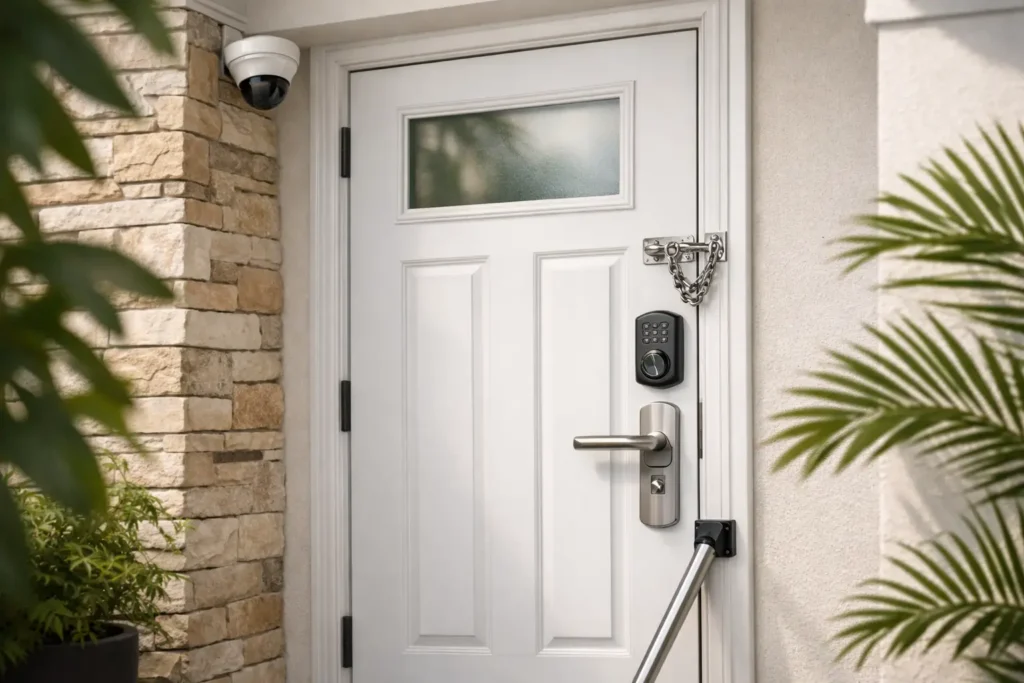
A sliding patio door that sticks, rattles, or will not fully latch is more than a daily annoyance. It can be a weak point in your home. Good door security begins with a door that closes squarely, locks correctly, and stays firmly in its track – especially in Southeast Florida, where humidity, salt air, heavy use, and shifting components can wear down sliding-door hardware over time.
For many homeowners, the concern is not whether a patio door looks old. It is whether it still provides the protection, comfort, and peace of mind it should. A few targeted repairs can often make a meaningful difference without the expense of replacing an entire door.
Door Security Starts With How Your Door Moves
A sliding glass door has several components working together: rollers, tracks, panels, handles, locks, and the frame. When one part wears out, it can affect the rest. Worn rollers may cause the panel to drag. A damaged or dirty track can keep the door from reaching its proper closed position. If the door does not sit squarely in the frame, even a good lock may not engage as intended.
This is why forcing a heavy slider closed is never a good long-term answer. It can strain the handle, damage the lock hardware, and create more wear on the track. It also makes it easier to overlook a door that is only partially latched.
A properly repaired sliding door should glide with controlled, consistent movement and meet the frame evenly when closed. High-quality stainless-steel precision ball-bearing rollers can be a worthwhile upgrade for homeowners dealing with corroded, noisy, or repeatedly failing rollers. They are built for smoother operation and hold up better in Florida’s humid coastal conditions than lower-grade components.
Check the Lock Before You Trust It
Many older sliding doors rely on a basic latch that was designed for convenience more than serious protection. If the handle feels loose, the latch does not catch consistently, or the lock can be moved without fully securing the panel, it is time for an inspection.
A double-bolt lock upgrade is one of the most practical improvements for many sliding patio doors. Instead of relying on a single point of engagement, this type of lock adds holding strength at two points. The right option depends on the door style, frame condition, and how the panels align, so the lock should be selected and installed to fit the specific door rather than treated as a one-size-fits-all accessory.
Do not assume a locked door is automatically secure. Close the door slowly and watch the lock engage. The panel should be fully seated in the frame, the handle should operate without excessive play, and the lock should not need to be lifted, pushed, or forced into position. Small alignment problems can become security problems when they are ignored.
Signs Your Sliding Door Lock Needs Attention
A lock should be repaired or evaluated when it sticks, slips out of place, fails to catch every time, or requires unusual pressure to operate. Visible corrosion, a cracked handle, missing screws, or a door panel that can still move noticeably after locking are also clear warning signs.
Homeowners sometimes replace only the handle because it is the most visible broken part. That may be enough in some cases, but it may not address the real issue. A technician should also inspect the rollers, track, strike area, and panel alignment to make sure the repaired handle and lock can do their job.
Do Not Overlook the Track and Frame
The bottom track of a sliding door is easy to ignore because it collects dirt where few people look. Yet it has a major effect on operation and door security. Sand, pet hair, leaves, moisture, and small debris can interfere with the rollers and prevent the panel from closing all the way.
Regular cleaning helps, but cleaning alone will not correct a bent, cracked, deeply worn, or damaged track. In those cases, the door may continue to drag and sit out of alignment. Track repair or replacement can restore the proper path for the rollers and help the door close securely again.
The frame also deserves a close look. Loose fasteners, damaged strike areas, corroded metal, or gaps around the door can affect both security and weather protection. Florida homes are exposed to strong rain, wind-driven debris, and years of heat. A professional inspection can separate a repairable hardware issue from a condition that calls for more extensive work.
Glass, Screens, and Privacy Matter Too
Door security is not limited to the lock. Clear sightlines into a patio, living room, or bedroom can make a home feel exposed, particularly after dark. Window coverings, curtain drop shades, and motorized shades can improve privacy while making daily use more convenient.
Screens serve a different purpose, but they still affect how safely and comfortably you use your outdoor space. A torn screen or damaged sliding screen door will not secure a home in the same way as a locked glass door, yet it can lead homeowners to leave a main patio door open when pests are active. A properly functioning screen enclosure or retractable screen makes it easier to enjoy airflow without inviting insects inside.
Glass damage should also be addressed promptly. A cracked panel, failing seal, or loose glass component can worsen with use and weather exposure. The right repair depends on the glass type, door design, and overall condition of the unit. Sometimes replacing a glass component is practical; other times, a broader door repair provides better value.
Everyday Habits That Support Better Door Security
Hardware upgrades work best when paired with a few simple routines. Make a habit of checking that patio doors are fully closed and locked before leaving the house or going to bed. If a slider is difficult to operate, do not postpone the repair just because it still moves. Difficulty is often the first sign that rollers, tracks, or alignment need attention.
Keep the track clear of buildup, but avoid using heavy grease or improvised lubricants that can attract more dirt. Be careful with adjustable security bars or aftermarket devices as well. Some can be useful when fitted correctly, but a poor fit can interfere with normal door operation or create a false sense of protection. The primary lock, the door alignment, and the condition of the frame should always come first.
For rental properties or seasonal homes, include sliding doors in regular maintenance checks. A door that sat unused through a humid summer may have corrosion or debris buildup that was not obvious during a quick walk-through.
Repair or Replace? The Practical Decision
A complete door replacement is not always necessary. If the glass, frame, and panels are in generally good condition, replacing worn rollers, repairing tracks, installing a solid aluminum handle, and upgrading the lock can restore smooth operation and improve security at a more accessible cost.
Replacement may make more sense when there is severe frame damage, recurring structural problems, failed components that are no longer available, or a door that cannot be brought back into proper alignment. Homeowners considering impact-rated upgrades, major remodeling, or a change in door style may also find replacement the better long-term choice.
The key is getting a clear assessment of the full door system. A quick fix that ignores a damaged track or misaligned panel can lead to repeat repairs. On the other hand, replacing an entire door when high-quality components can solve the problem is unnecessary expense.
Get a Clear Assessment of Your Door Security
A local sliding-door specialist can inspect how the door rolls, closes, locks, and fits within the frame, then explain which repairs will make the biggest difference. Protech Sliding Doors provides free estimates for homeowners who want practical recommendations, high-quality parts, and work focused on the actual condition of the door.
If your patio door drags, refuses to lock, or no longer feels secure, treat it as a repair priority rather than a minor inconvenience. A door that closes smoothly and locks firmly lets you enjoy your patio and living space with one less thing to worry about.