
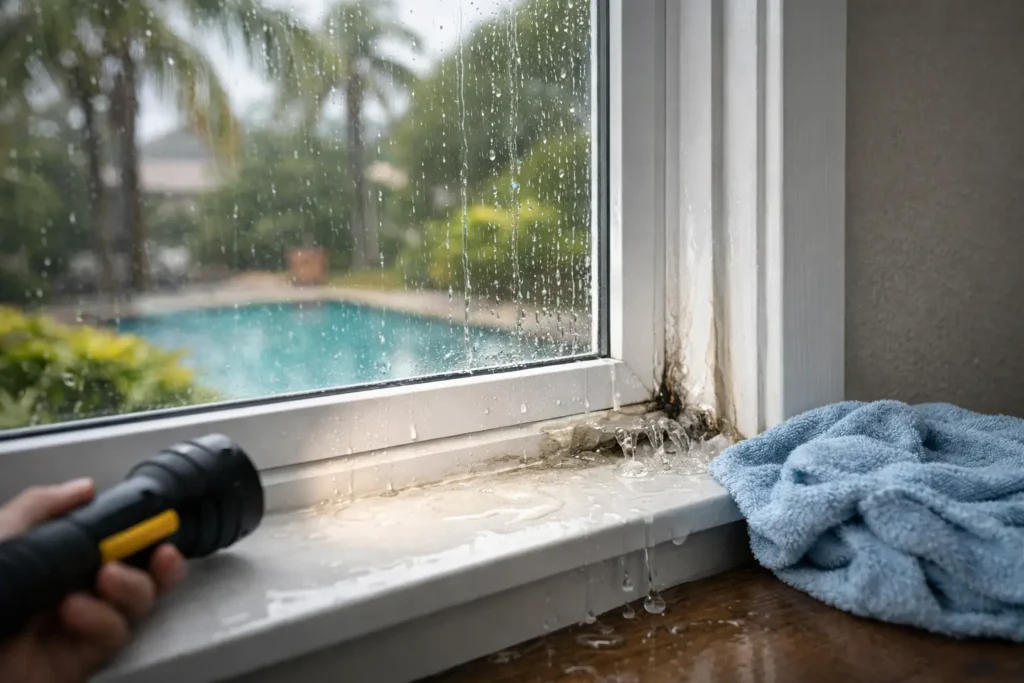
A window leak rarely starts with a dramatic stream of water. More often, it shows up as a damp spot beneath the sill after a heavy afternoon storm, a musty smell near the wall, bubbling paint, or water collecting in a sliding window track. In Southeast Florida, window leak causes are often tied to wind-driven rain, intense sun, high humidity, aging sealants, and drainage systems that have not been maintained.
The key is finding where the water is actually entering. Water can travel along the frame, behind trim, or inside a wall before it becomes visible. What looks like a failed pane of glass may be a blocked drain hole, cracked exterior caulking, worn weatherstripping, or an installation issue around the opening. Addressing the true source early can help prevent damaged drywall, mold growth, wood rot, and a much larger repair bill.
Common Window Leak Causes
Clogged weep holes and window tracks
Most sliding and impact-style windows have weep holes, which are small drainage openings designed to move rainwater out of the frame. During a hard rain, some water can enter the exterior track by design. It should drain outside rather than overflow into the home.
Dirt, leaves, insects, paint, and debris can block these openings. Once the track fills with water, wind pressure can push it past interior seals and into the sill or wall. This is one of the most common and fixable window leak causes in Florida homes.
A homeowner can gently vacuum loose debris from accessible tracks, but avoid forcing wire or sharp tools into drainage openings. It is easy to damage a seal or push debris farther into the drain path. If the tracks are heavily corroded, bent, or repeatedly holding water, a professional inspection is the better next step.
Failed exterior caulking or perimeter sealant
The sealant around a window frame does not last forever. Florida sun dries and shrinks caulk, while heat, moisture, and normal building movement can cause it to separate from the stucco, siding, or frame. Small gaps are enough for wind-driven rain to find its way behind the window.
Look for cracking, peeling, missing sections, or gaps at the outer edge of the frame. Discoloration on the wall below the window can also point to water entering around the perimeter. Fresh caulk is not automatically the answer, however. Applying sealant over wet material, deteriorated caulk, or a drainage path can trap water where it does not belong.
Proper resealing requires removing failed material where necessary, preparing a clean and dry surface, and using a compatible exterior-grade sealant. The details matter, especially on stucco homes and around impact windows.
Worn weatherstripping, glazing, or internal seals
Weatherstripping closes small gaps between moving window panels and frames. Over time, it can flatten, tear, shrink, or become brittle. This may cause both water intrusion and air leaks, making rooms feel warmer and allowing outside humidity to enter.
The seals holding glass within the sash can also deteriorate. On insulated glass units, fogging between panes may indicate a failed glass seal. That problem does not always cause rainwater to enter the home, but it is a sign that the window assembly is aging and should be evaluated.
Sliding windows need particular attention because their panels, rollers, and tracks must stay aligned for seals to meet correctly. A panel that drags, rattles, or will not latch securely can leave a path for water during a storm.
Improper installation or flashing problems
A window can have good glass and a clean-looking frame but still leak because water is getting behind it at the opening. This is usually an installation or flashing issue. Flashing and waterproof barriers direct water away from the wall structure, but they are hidden behind exterior finishes, so the problem is not always obvious.
Leaks caused by installation defects often appear at the top corners of a window, along the sides of the interior trim, or after rain hits the wall from a certain direction. They may only occur during storms with strong wind, which can make them frustrating to diagnose.
This is not a repair to guess at with a tube of caulk. A qualified technician should inspect the window, surrounding wall condition, drainage design, and exterior seal lines before recommending a repair. Depending on the findings, the solution may be targeted sealing, trim removal, flashing correction, or replacement of a damaged component.
Cracked frames, loose hardware, and damaged glass
Aluminum, vinyl, and wood frames can all develop problems over time. Corrosion, impact damage, loose fasteners, cracked corners, and warped sashes can affect how the window closes and drains. Glass cracks can also allow direct water entry, especially if they extend toward an edge of the pane.
Do not overlook hardware. A window that will not lock or close tightly is not only less secure, it may be unable to compress its weatherstripping. For sliding units, worn rollers or damaged tracks can pull the sash out of alignment. Replacing the right component can sometimes restore a tight fit without requiring a full window replacement.
Condensation mistaken for a leak
Not all moisture around a window comes from outside. In humid South Florida homes, indoor condensation can form when warm, moist air meets a cooler glass surface or metal frame. You may notice droplets on the interior glass, dampness on the frame, or mildew around a sill.
Condensation is more likely when the air conditioning is running, indoor humidity is high, or airflow around the window is limited by heavy blinds or curtains. It usually appears across the interior surface rather than only after rainfall.
The distinction matters. Exterior water intrusion needs a repair to stop rain from entering. Condensation may require better ventilation, humidity control, improved air circulation, or attention to failing window seals. A professional can help determine which issue you have before money is spent on the wrong solution.
How to Narrow Down the Source of a Window Leak
Start by noting when the moisture appears. If it happens only during or shortly after rain, pay attention to wind direction and whether the leak occurs during light rain or only in a severe storm. If the area becomes damp on dry days, plumbing, condensation, or moisture already trapped in the wall may be involved.
Check the visible track for standing water, dirt buildup, and blocked weep holes. From outside, inspect for visibly failed caulk, cracked frame corners, loose trim, and gaps around the window. Inside, look for peeling paint, swollen baseboards, stains at the upper corners, soft drywall, and mildew. Take photos before cleaning the area, especially if the leak is intermittent.
Avoid testing the window with a high-pressure hose. A pressure stream can force water through openings that normal rain would not penetrate and can create misleading results. Controlled water testing, performed in stages, is more useful when a technician needs to isolate the entry point.
When a Window Leak Needs Professional Repair
A little water in an exterior sliding track may be normal if it drains properly. Water reaching the interior sill, drywall, flooring, or trim is not. Call for an inspection when the leak returns after cleaning, the window is difficult to open or lock, you see staining or mold, or the wall feels soft around the opening.
Professional service is especially worthwhile after a tropical storm or hurricane-season downpour. Wind-driven rain exposes weaknesses that ordinary weather may not reveal. A technician can identify whether the problem is related to drainage, weatherstripping, frame alignment, glass, perimeter sealing, or the wall opening itself.
For homeowners who want to preserve an otherwise functional window, repair can often be the practical choice. Replacing worn rollers, damaged tracks, seals, handles, locks, or glass components may cost less than replacing the entire unit. Full replacement may make more sense when the frame is severely damaged, the glass system has failed extensively, or the window no longer meets the home’s performance and security needs.
Protech Sliding Doors provides local inspections and practical repair recommendations for South Florida homeowners. The goal is not to push a replacement when a durable component repair will solve the problem. It is to stop the water, restore proper operation, and leave the area clean and secure.
Protect the Area While You Schedule Service
If rainwater is actively entering, move rugs, furniture, and electronics away from the window. Dry visible moisture promptly with towels and use a fan to improve airflow. Do not cover weep holes with tape or seal every opening in the track, since that can prevent the window from draining.
If drywall is saturated, paint is blistering, or there is a persistent musty odor, do not wait for the next storm to see what happens. Water hidden behind a wall can continue causing damage after the surface looks dry. A timely inspection gives you a clearer answer and a more manageable repair.
A window should keep the weather outside while still opening, closing, and locking the way it should. When it does not, a careful diagnosis and the right repair can protect your home without turning a small leak into a major project.