
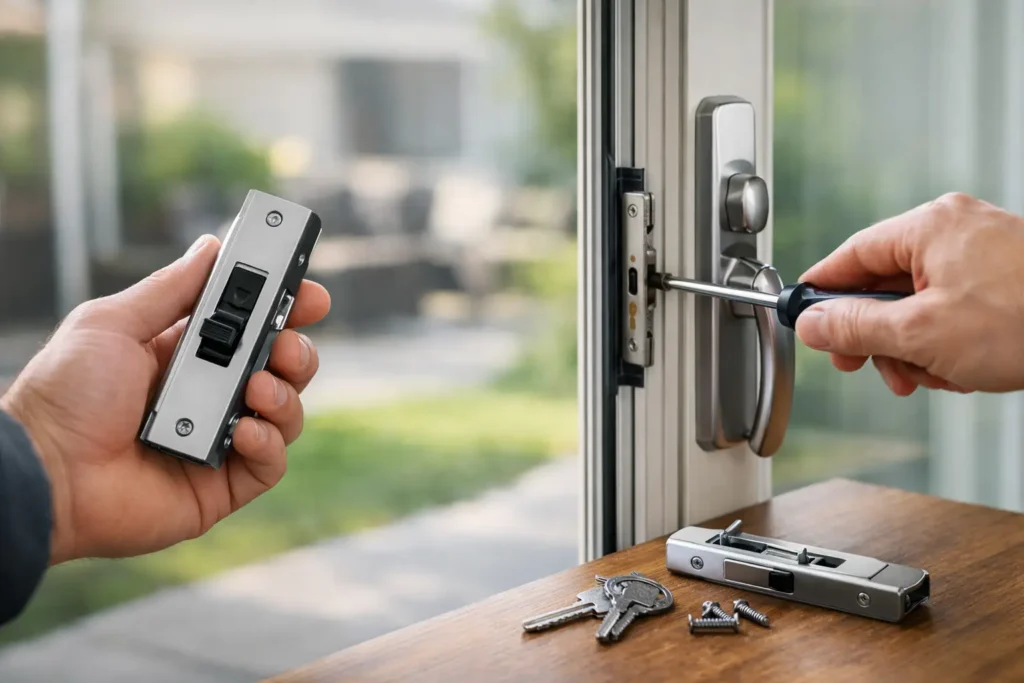
A patio door that does not lock firmly is more than an everyday annoyance. It can leave a ground-floor entry vulnerable, make it harder to secure the home at night, and turn a simple trip to the patio into a frustrating routine. Sliding door lock replacement is often a practical, affordable way to restore security without replacing the entire door.
For Southeast Florida homeowners, lock problems rarely happen in isolation. Salt air, humidity, frequent use, settling frames, worn rollers, and dirty tracks can all affect how a sliding glass door closes and latches. The right fix starts with identifying whether the lock itself has failed or whether another door component is preventing it from working correctly.
Signs Your Sliding Door Lock Needs Attention
A working sliding door lock should engage smoothly when the door is fully closed. If you need to lift the door, push hard on the panel, or repeatedly move the handle to get the lock to catch, something needs attention. Waiting can allow a minor alignment issue to wear out the lock body or strike plate completely.
Common warning signs include a loose handle, a key that turns without locking the door, a latch that will not extend, or a lock that catches only partway. Some homeowners also notice that the door appears locked but can still be opened with a firm pull. That is a serious security concern and should be addressed promptly.
Visible corrosion is another reason to schedule an inspection. Florida moisture can damage interior lock parts even when the exterior handle still looks acceptable. A corroded or worn mechanism may work one day and fail the next, especially after heavy use or a period of rain and humidity.
The Lock May Not Be the Only Problem
Many patio-door lock calls involve a door that is out of alignment rather than a defective lock. When rollers wear down, the active panel can sag and sit too low in the frame. The latch then misses the strike plate, making it seem like the lock is broken.
Tracks can create the same issue. Dirt, sand, pet hair, debris, dents, and track damage make a door drag instead of glide. Homeowners sometimes force the handle or slam the panel closed to compensate. That can bend hardware, strip handle connections, and shorten the life of a lock that might otherwise have been fine.
A professional inspection should look at the complete operating system: rollers, track condition, door alignment, handle connections, latch placement, and the frame-side strike. Replacing only the lock on a heavy, dragging door can solve the immediate symptom but may not provide a lasting result.
When a Simple Adjustment Is Enough
If the lock mechanism is still intact and the latch works when the door is held in the correct position, an adjustment may be all that is needed. Raising the panel through the roller adjustment screws, realigning the strike plate, or correcting a loose handle can restore a proper latch.
This is generally the more cost-effective option when the hardware is in good condition. It also helps prevent unnecessary replacement. However, adjustment is not a good long-term answer if the lock is corroded, cracked, internally worn, or unable to hold the door securely.
When Replacement Is the Better Choice
Sliding door lock replacement makes sense when the mechanism no longer engages consistently, the key cylinder is damaged, the handle has broken mounting points, or the lock can be bypassed because of wear. It is also worth considering when an older single-point lock no longer provides the level of security you want for a patio or ground-floor entrance.
The replacement must fit the door profile, existing mounting holes, handle style, and latch location. Sliding glass doors are not one-size-fits-all. Choosing hardware based only on appearance can lead to poor alignment, drilled holes in the wrong location, or a lock that never closes properly.
Why a Double-Bolt Lock Upgrade Can Matter
Standard patio-door locks often use a single latch point. While that may be adequate for some doors, a double-bolt lock upgrade can add a stronger, more dependable connection between the sliding panel and the frame. The two locking points help resist prying and provide greater peace of mind for homeowners concerned about patio-door security.
This upgrade is especially valuable for doors at the rear of the home, doors that face a pool area, or sliders with limited visibility from the street. It can also be a smart improvement after moving into a new home, completing a renovation, or replacing worn original hardware.
There is a practical trade-off: a better lock still depends on a door that closes squarely. If the rollers are failing or the frame-side receiver is loose, even high-quality locking hardware will not perform as intended. A complete repair approach addresses the lock and the components that allow it to line up correctly.
What to Expect During a Professional Lock Replacement
The work begins with checking how the door slides and where the latch meets the frame. A technician can determine whether the current lock is damaged, improperly aligned, or affected by worn rollers and track problems. This avoids replacing parts that are not the root cause.
Once the proper hardware is selected, the old handle and lock assembly are removed carefully. The replacement lock is fitted, secured, and tested repeatedly with the door opened and closed. The strike plate or receiver is adjusted as needed so the bolts engage fully without requiring force on the handle.
A good installation leaves the door operating smoothly and the lock easy to use. You should not have to lift the panel, shoulder it closed, or guess whether it caught. If the door feels heavy, sticks, or rolls unevenly after the lock work, ask about roller and track service before the problem puts added stress on the new hardware.
Avoid Common Temporary Fixes
A dowel in the track can add a secondary barrier when the door is closed, but it is not a replacement for a functioning lock. It also prevents normal entry and exit through that door until it is removed. Temporary bars may have a place while waiting for service, but they should not be the permanent solution to failed hardware.
Avoid forcing a stuck key, tightening random screws without identifying their purpose, or spraying heavy oil into the lock. Excess lubricant can collect grit, while forcing a misaligned latch can break internal parts. A dry, appropriate lock lubricant may help a clean and otherwise healthy mechanism, but it will not repair corrosion, a damaged latch, or a door that has dropped out of alignment.
It is also wise to avoid purchasing the first replacement handle set that looks close enough. Hole spacing, offset handles, mortise dimensions, key orientation, and latch styles vary. Correct parts and precise adjustment are what make the repair secure and durable.
Protecting Your Patio Door After the Repair
Regular care helps a new lock last longer. Keep the track vacuumed or brushed clean so the panel does not drag. Check that the door closes without rubbing the frame, and use the handle gently rather than pulling the door shut by the lock itself. If the door begins to feel heavier, address the rollers before the alignment affects the latch.
For homes near the coast, periodic inspection is particularly worthwhile. Salt-laden air can speed up corrosion on hardware and fasteners. Catching rough operation early is usually less expensive than waiting until the door will not lock or open.
Protech Sliding Doors helps homeowners throughout Southeast Florida diagnose sliding-door problems as a complete system, from locks and solid aluminum handles to tracks and high-quality stainless-steel precision ball-bearing rollers. A free estimate can clarify whether your door needs an adjustment, a lock replacement, or a security-focused upgrade.
A patio door should close easily, lock firmly, and let you enjoy your home without second-guessing its security. If yours does not, arranging a professional inspection now can restore that confidence before a small hardware issue becomes an urgent repair.