
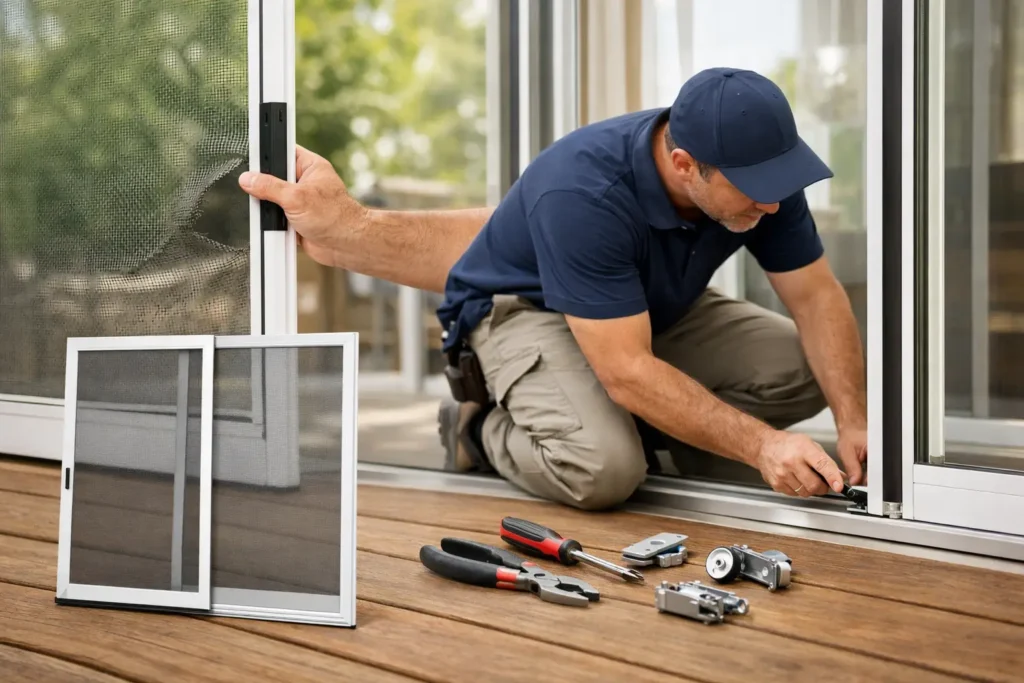
A screen door that drags across the track, jumps off its frame, or leaves a gap at the edge can turn a pleasant Florida evening into a battle with mosquitoes. Sliding screen door repair is often a practical, affordable way to bring back fresh air, pest control, and easy access to your patio without replacing the entire door system.
The right repair depends on what has actually failed. A torn mesh panel may be a straightforward rescreening job. A door that takes two hands to move may have worn rollers, a bent track, a loose frame, or several problems working together. Addressing the real cause matters because forcing a damaged screen door can bend the frame, wear out the handle, and create a more expensive repair later.
What Causes Sliding Screen Doors to Fail in South Florida?
Sliding screen doors work hard in Southeast Florida. Salt air near the coast, high humidity, heavy rain, blown debris, frequent patio use, and year-round sun all take a toll on lightweight screen frames and moving hardware. Even a good door can become difficult to operate when dirt and corrosion build up in the bottom track.
Rollers are one of the most common trouble spots. These small wheels carry the weight of the door and allow it to slide. When rollers wear down, seize, crack, or lose adjustment, the door may scrape the track or come off its guide. Cheap replacement rollers can temporarily improve movement, but they often do not hold up well under regular use. Quality stainless-steel precision ball-bearing rollers are generally a better long-term choice in Florida’s humid environment.
Tracks also matter. A track packed with sand, pet hair, leaves, or construction debris can make a healthy door feel broken. If the track is dented, deeply grooved, or corroded, cleaning alone will not solve the problem. The roller and track need to work as a pair. Replacing only one worn component can leave the door dragging and shorten the life of the new part.
Screen material has its own set of problems. Standard fiberglass mesh can tear from pets, children, patio furniture, or storm debris. Sun exposure can make older mesh brittle, while the spline – the cord that holds the mesh in the frame channel – can shrink or loosen over time. A screen that looks wavy, pulls out at the corners, or has a small opening is no longer doing its job of keeping insects outside.
Sliding Screen Door Repair Starts With the Right Diagnosis
Before buying parts or trying to force the door back into place, look closely at how it behaves. Does it drag only near one end of the opening? Does it roll smoothly after the track is cleaned but still fail to latch? Is the mesh intact while the frame is visibly bowed? The answers point to different repairs.
A basic inspection starts with the lower track. Vacuum loose debris, then wipe the track with a damp cloth and mild cleaner. Avoid coating the track with heavy grease. Grease catches sand and grime, creating a sticky abrasive paste that can make the problem worse. A dry silicone-based lubricant may be appropriate after cleaning, but lubrication cannot revive a cracked roller or repair a damaged track.
Next, inspect the frame corners, handle area, and screen mesh. Loose screws, cracked corner pieces, and a bent frame can prevent the panel from sitting squarely in the opening. If the door has adjustment screws near the bottom corners, small adjustments may raise the panel enough to stop it from scraping. Adjust both sides gradually. Raising one side too far can make the door bind at the top or leave it out of alignment with the latch.
Watch for signs that the door is not the only issue. If a sliding glass patio door is rubbing, its track is damaged, or the screen door has no stable upper guide, the full opening may need attention. A screen door repair should restore smooth operation, not simply make the panel fit for a few weeks.
When a Simple Repair Makes Sense
Repair is usually the smart choice when the aluminum frame remains straight, the door fits the opening, and the issue is limited to mesh, rollers, a handle, a latch, or minor track buildup. Rescreening can be especially worthwhile when the frame and hardware are otherwise in solid condition.
A new latch or handle can also make a noticeable difference. The screen door should close cleanly and stay closed in normal use. Keep in mind that a sliding screen door is not a security door. It provides airflow and insect protection, but it should not be relied on to secure a home. The lock and handle on the main sliding glass door deserve separate attention, particularly if they are loose, difficult to engage, or outdated.
For homeowners who enjoy keeping doors open, repairing a screen door can be one of the simplest ways to make a patio, porch, or pool area more usable. It is a small repair with a daily payoff: easier trips outside, fewer insects indoors, and less frustration every time someone walks through the opening.
When Replacement Is the Better Investment
Replacement becomes more sensible when the frame is badly bent, corrosion has weakened critical components, the door no longer matches the opening, or repeated repairs have failed. A distorted frame often causes recurring roller and latch problems because it cannot travel straight in the track.
It may also be time to replace the panel if you want a different type of screen. Pet-resistant mesh offers more durability for homes with dogs or cats. Solar screen materials can reduce glare and heat, though they may slightly reduce visibility and airflow. Fine insect mesh can help with smaller pests, but it can also collect dust more quickly and may need more routine cleaning.
For wider openings or homeowners looking for a cleaner view, retractable screen systems are another option. They can provide insect control when needed and disappear into a housing when not in use. The best choice depends on the opening, how often the door is used, exposure to wind, and the level of visibility, shade, and durability you want.
Why Roller and Track Repairs Need Care
Removing a sliding screen door can look easy, but lightweight aluminum frames can bend when lifted or twisted incorrectly. Older doors may have brittle corner keys, worn guides, or hardware that is no longer standard. The wrong roller size or adjustment setting can cause the door to scrape, rattle, or slip off the track again.
Professional repair is especially useful when the track is damaged, the frame has become misaligned, or the exact replacement hardware is difficult to identify. A technician can measure the roller assembly, inspect the guide system, correct the door height, and test the panel through its full travel. That level of diagnosis helps avoid replacing parts that were never the real problem.
At Protech Sliding Doors, repairs are approached as a complete operating system: screen panel, rollers, track, handle, latch, frame, and the adjoining patio door opening. That is how a repair moves beyond a quick patch and gives the homeowner a door that glides smoothly again.
Protect Your Repaired Screen Door
Once the door is working properly, a little maintenance can extend its life. Clean the bottom track regularly, especially after windy weather or landscaping work. Do not slam the panel, and avoid pushing it from the mesh itself. Use the frame or handle instead.
Check for loose screws and small mesh tears before they spread. If the door begins to drag again, do not keep forcing it. Early roller adjustment or track cleaning is usually easier than repairing a bent frame or replacing a heavily worn track.
A sliding screen door should feel like a convenience, not another chore on the home repair list. When it stops gliding, closes poorly, or lets pests through, a careful inspection and the right repair can restore the comfort your patio door was meant to provide.