
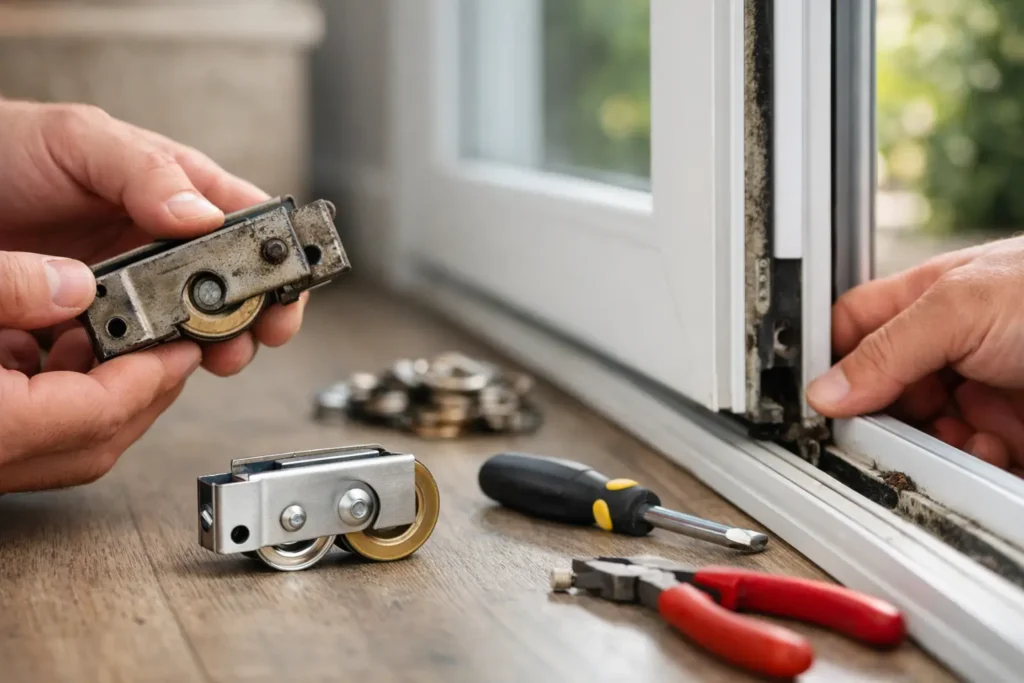
A patio door should not require a shoulder check to open. When a glass slider drags, sticks, scrapes, or jumps along the track, the problem is often underneath the door: worn, corroded, or broken rollers. Timely sliding patio door roller replacement can make the door glide smoothly again while helping prevent costly damage to the track, frame, and glass.
For South Florida homeowners, this is more than a minor annoyance. Humidity, salt air near the coast, sand, everyday debris, and years of heavy use can all wear down the moving parts in a sliding glass door. The good news is that a difficult door does not automatically mean you need a full door replacement. In many cases, a professional roller and track repair restores safe, easy operation at a much more affordable cost.
Signs Your Patio Door Rollers Are Failing
The clearest sign is resistance. If you have to pull hard on the handle, use both hands, or lift the door slightly just to move it, the rollers may no longer be supporting the door correctly. A healthy sliding door should move with steady, controlled pressure, not grind across the track.
Grinding and scraping noises also deserve attention. Dirt in the lower track can create noise, but cleaning alone will not solve a roller with a seized bearing, a flattened wheel, or a corroded housing. If the sound returns quickly after cleaning, the door likely needs a closer inspection.
You may also notice that the door sits unevenly, catches at one point, or does not close tightly against the frame. Worn rollers can allow a heavy glass panel to sag. That misalignment can affect the lock, weatherstripping, and screen door operation. Left alone, the metal door frame can start rubbing directly against the track, creating gouges that make every future repair more involved.
Why Florida Sliders Wear Out Faster
A sliding patio door carries substantial weight. Even a standard glass panel can weigh hundreds of pounds, and the rollers carry that load every time someone opens or closes the door. Older rollers, low-grade wheels, and rollers with exposed steel components are especially vulnerable in South Florida conditions.
Moisture is a major factor. Humid air, wind-driven rain, and coastal salt can corrode bearings and roller housings. Sand, pet hair, leaves, and small pieces of debris settle into the track and act like abrasive grit under the door. A roller that begins with a small rough spot can deteriorate quickly when it is forced over a dirty or damaged track day after day.
This is why simply spraying lubricant into the bottom track is rarely a lasting fix. Some products can collect dirt and create a sticky buildup. Others may temporarily mask the issue while the worn roller continues damaging the track. Proper service starts with identifying whether the trouble is the rollers, the track, the door adjustment, or a combination of all three.
What Sliding Patio Door Roller Replacement Involves
Professional sliding patio door roller replacement begins with an inspection of the complete operating system. The technician checks how the panel moves, whether it is square in the opening, the condition of the lower track, and whether the locks and handles line up correctly. This matters because replacing rollers without correcting alignment can leave the door difficult to secure or prone to premature wear.
The glass panel is then carefully removed and placed in a protected work area. The old roller assemblies are taken out, and the bottom rail is inspected for corrosion, damage, or loose hardware. High-quality stainless-steel precision ball-bearing rollers are a strong choice for Florida homes because they are designed for smoother movement and better resistance to corrosion than basic components.
Once the new rollers are installed, the track is cleaned and evaluated. A track with light buildup may only need thorough cleaning and adjustment. A track that is deeply worn, bent, or scarred may need repair or replacement. This is the part many quick fixes overlook: new rollers cannot perform their best on a severely damaged running surface.
The panel is reinstalled, adjusted to the proper height, and tested through its full travel. A good repair should allow the door to glide without scraping while still closing firmly enough for the lock to engage properly. The final check should include the handle, latch, weatherstripping, and any sliding screen door that shares the opening.
Rollers, Tracks, and Locks Work Together
A stubborn patio door often has more than one issue. When rollers fail, homeowners tend to push or pull harder on the handle. Over time, that extra force can loosen the handle or put stress on the locking hardware. If the door is sagging, the latch may no longer meet the strike plate cleanly, leaving the door harder to lock or less secure.
That is why a complete door assessment is valuable. A technician can determine whether the repair should include roller replacement alone or whether the track, handle, lock, or alignment also needs attention. In some homes, upgrading to a double-bolt lock is a practical security improvement while the door is already being serviced. A door that slides easily but does not lock securely is not a finished repair.
There is also a cost consideration. Replacing rollers before the track is heavily damaged is usually the more economical path. Once a heavy panel has worn grooves into the track, the repair can become more extensive. Addressing the problem when the first signs appear helps protect the larger components of the door system.
Can You Replace Patio Door Rollers Yourself?
Some homeowners can handle basic track cleaning and light maintenance. Vacuuming loose debris, wiping the track with a mild cleaner, and checking for visible obstructions are reasonable first steps. Avoid forcing a stuck door, especially if the glass panel is large or the frame is visibly out of alignment.
Roller replacement itself is a different level of project. The panel must be removed safely, which can be difficult because of its weight and awkward size. Doors also vary widely by manufacturer, age, and frame design. The wrong roller size or adjustment can make the door bind, fail to lock, or sit unevenly in the opening.
There is a trade-off to consider. A do-it-yourself repair may save money when the door is small, the parts are clearly identified, and the track is in good shape. But an incorrect repair can damage the glass, bend the frame, or turn a roller issue into a track replacement. For a heavy slider, a corroded older door, or any door that does not lock properly, professional service is generally the safer choice.
How to Help New Rollers Last
After repair, regular track care can significantly extend roller life. Keep the lower track free of sand, leaves, and pet hair. A vacuum with a narrow attachment works well for the corners, followed by a wipe with a clean cloth. Check the track after storms or after using the patio, when debris tends to build up quickly.
Do not slam the panel or pull it from the very edge. Use the handle and close it with steady pressure. If the door starts feeling rough again, schedule an inspection rather than waiting until it stops moving. Early adjustment can prevent metal-on-metal contact and protect the new roller assemblies.
A Smooth Door Is a Daily Comfort
Your patio door is one of the most-used openings in the home. It connects the living room to the pool area, patio, porch, or backyard, and it should make that transition easy. A door that glides smoothly is quieter, easier to secure, and more comfortable for everyone in the household.
Protech Sliding Doors provides free estimates for homeowners who need clear answers about worn rollers, damaged tracks, sticking glass sliders, and related lock or handle concerns. A careful inspection can often identify a practical repair that restores daily convenience without replacing a door that still has years of life left.
If your slider is getting harder to move, do not wait for the rollers to fail completely. A prompt repair can protect the track, improve security, and make stepping outside feel simple again.