
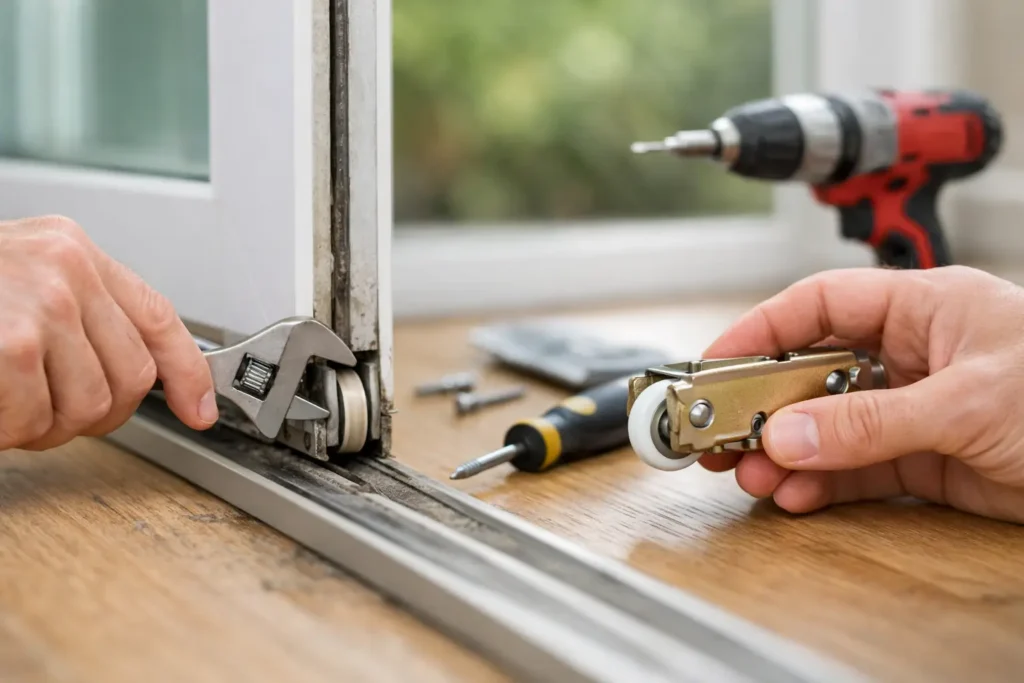
A patio door that takes both hands to move is more than an everyday annoyance. In South Florida, sand, humidity, salt air, and years of daily use can turn a once-smooth slider into a door that drags, sticks, rattles, or will not lock correctly. Proper sliding door track repair can restore easy operation, protect the frame from further damage, and often prevent the expense of replacing the entire door.
The key is identifying what is actually causing the problem. A dirty track may be a simple maintenance issue. A flattened rail, worn rollers, sagging door panel, or damaged threshold needs a more complete repair. Treating every hard-to-slide door as a track problem can lead to wasted money and a short-lived fix.
Sliding Door Track Repair Starts With Diagnosis
The visible track is only one part of a sliding patio door system. The heavy glass panel rides on rollers at the bottom, while the upper frame keeps the panel aligned. If the rollers wear down, seize from corrosion, or come out of adjustment, they can scrape and dent the track beneath them. Once that happens, cleaning alone will not make the door glide properly.
Look for the pattern behind the problem. A door that feels gritty but still rolls reasonably well may have packed debris in the lower channel. A door that drags in one spot, makes a grinding sound, or leaves metal shavings behind often has roller or track damage. If the panel sits low, catches the frame, or requires lifting before it will lock, the rollers may be failing or the door may be out of alignment.
Florida homes see these issues often because patio doors are exposed to moisture, windblown sand, pool-area debris, and frequent use. Aluminum tracks can become pitted or bent, especially when worn steel rollers grind against them. Corroded hardware can make an otherwise solid door feel much older than it is.
A good inspection checks the complete system: the lower track, roller assemblies, door alignment, glass panel condition, handle, latch, lock, and frame. That full-component approach matters because a new track installed under bad rollers can be damaged again quickly.
Signs Your Track Needs More Than Cleaning
Vacuuming and wiping the track is a smart first step, but some symptoms call for repair. Pay attention if the door suddenly becomes hard to open, if it jumps or binds halfway across the opening, or if you hear scraping metal rather than a rolling sound.
Deep grooves in the rail are another clear warning sign. The rolling surface should be reasonably straight and consistent. When it has flattened, cracked, or worn into a channel, the rollers cannot travel smoothly. A bent track can also pull the door out of alignment and put added stress on the lock.
Water collecting in the bottom channel deserves attention as well. Patio door tracks include drainage paths designed to direct water away from the frame. Dirt, leaves, insect debris, or old sealant can block those paths. While clearing drains may solve the immediate issue, standing water can also speed up corrosion of rollers, screws, and track components.
Do not ignore a slider that no longer locks easily. Forcing a handle or latch on a dragging door can damage the lock hardware. More importantly, a patio door that will not close and lock securely is a safety concern. In many cases, correcting the rollers and track alignment brings the panel back into its proper locking position. If the lock is worn, a double-bolt lock upgrade can provide stronger security at the same time.
What a Professional Track Repair May Include
The right repair depends on the door style and the condition of its components. Some tracks can be cleaned, straightened, and restored. Others need a replacement track cap or rail installed over the damaged surface. Severe damage may require replacing the lower track section or addressing problems within the frame.
Before repairing the rail, a technician should remove or safely support the door panel and inspect the rollers. This is especially important with large insulated-glass sliders, which are heavy and awkward to handle. Quality replacement rollers with stainless-steel precision ball bearings are designed to handle the load more reliably than inexpensive parts that can corrode or flatten early.
Once the rollers are replaced or adjusted, the track surface can be evaluated accurately. The panel should then be set back into place, aligned, and tested through its full travel. A properly repaired door should move with controlled, easy effort. It should also meet the frame evenly and allow the lock to engage without lifting, pushing, or slamming the panel.
Track repair is not always the least expensive-looking option at first glance, but it can be the most cost-effective one. Replacing only rollers on a badly damaged rail may provide temporary improvement, then leave the new rollers wearing prematurely. On the other hand, replacing an entire patio door when the frame and glass are still in good condition may be unnecessary. The best recommendation is based on the condition of the whole sliding door system, not a one-size-fits-all repair.
When Sliding Door Track Repair Means Replacement
A track can usually be repaired when damage is limited to the rolling surface and the frame remains structurally sound. Replacement becomes more likely when the lower frame is severely corroded, the track has major breaks or distortion, or water intrusion has caused broader damage around the opening.
Door replacement may also be worth considering when several major components are failing at once. For example, a door with damaged tracks, fogged insulated glass, a bent frame, outdated locking hardware, and chronic water leaks may not be a practical repair candidate. That decision depends on the age of the door, availability of compatible parts, the home’s security needs, and the homeowner’s budget.
For many homeowners, there is a middle ground. Replacing rollers, restoring the track, installing a solid aluminum handle, and upgrading the lock can give an existing patio door years of additional service. This is often a sensible choice when the glass is clear, the frame is sound, and the door fits the opening properly.
Can You Repair a Sliding Door Track Yourself?
Basic cleaning is a reasonable homeowner task. Vacuum loose debris from the lower channel, use a soft brush for packed dirt, and wipe the surface clean. Check that the drain openings are clear. Avoid using heavy grease or thick oil in the track. Those products collect grit, which can create an abrasive paste that makes the problem worse.
Adjusting a roller may also be possible on certain doors, but it requires care. Raising the panel too far can create rubbing at the top, while uneven adjustments can make the door bind or prevent the lock from lining up. If the adjustment screw will not move, forcing it can strip the hardware.
Removing a patio door panel and replacing rollers is usually best left to a trained technician. The work involves heavy glass, sharp aluminum edges, correct panel support, and precise reinstallation. It also requires knowing whether the apparent track damage is actually caused by failed rollers, a warped panel, a frame issue, or a threshold problem. A professional repair helps avoid damaging the glass, frame, or surrounding flooring during the process.
Keep Your Repaired Door Moving Smoothly
Once the door has been repaired, a little routine care goes a long way. Clean the track periodically, particularly after windy weather or outdoor projects that create dust and debris. Keep patio rugs, planters, and furniture positioned so leaves and soil do not constantly collect in the channel.
Operate the door gently rather than forcing it when it begins to feel different. A small change in how it rolls can be an early warning that a roller is loosening or debris is building up. Addressing that change quickly is far easier than waiting until metal parts begin scraping together.
It is also wise to test the lock after any change in door operation. A smooth-gliding door should close squarely and lock without a fight. For homeowners who use a patio door as a primary entry point, dependable locking hardware is not an optional detail.
At Protech Sliding Doors, the goal is to recommend the repair that makes sense for the door in front of you, whether that means cleaning and adjustment, new stainless-steel rollers, track restoration, or a larger replacement project. A free estimate gives you a clear starting point, and a properly repaired slider lets you get back to enjoying your patio without wrestling the door every day.