
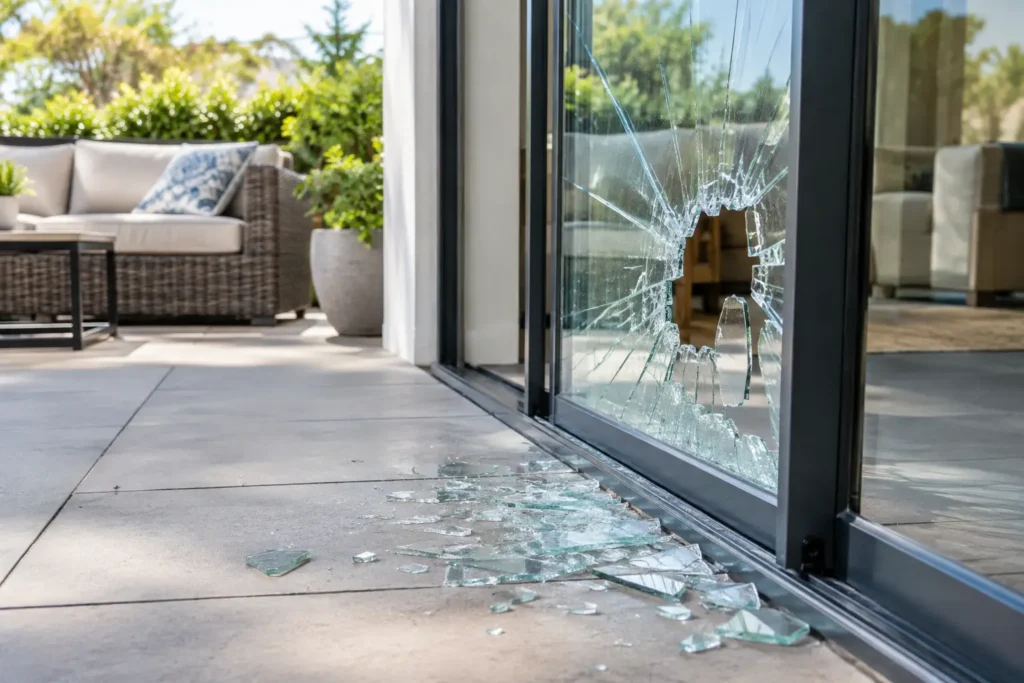
A shattered patio door panel changes the feel of a home immediately. There is broken glass near a high-traffic opening, an exposed entry point, and Florida heat, rain, insects, and humidity waiting outside. When patio glass breaks, the first priority is not figuring out why it happened. It is keeping people safe and getting the opening secured.
Sliding glass doors are large, heavy assemblies. The glass, aluminum frame, rollers, track, handles, locks, and weather seals all work together. A broken panel may be the obvious problem, but it can also reveal a door that has been dragging on worn rollers, sitting out of alignment, or failing to lock properly.
When Patio Glass Breaks, Start With Safety
Keep children, pets, and bare feet away from the area. Even tempered safety glass, which is designed to break into small pieces, can leave sharp fragments in the track, along the frame, and several feet beyond the door. Put on closed-toe shoes and heavy gloves before getting close enough to inspect the damage.
If the glass is still in the frame but cracked, do not push on it or try to test its stability. A cracked panel can suddenly release from the frame. Close off the room if possible and avoid sliding the door until a professional has evaluated it.
For loose glass on the floor, pick up larger pieces carefully and use a broom and dustpan for smaller fragments. Vacuum the surrounding floor, door track, and nearby rugs more than once. Glass can hide in roller channels and corners where it is easy to miss. Do not place broken pieces directly into a thin trash bag. Use a sturdy box or wrap the glass securely before disposal.
If the opening must be covered temporarily, use a solid material when available. Plywood is generally more secure than plastic sheeting, especially if rain or overnight security is a concern. Avoid driving screws through a sliding door frame unless necessary. Incorrect fasteners can damage the frame, interfere with replacement glass work, or create future water-intrusion issues.
Secure the Home Without Making the Repair Harder
A broken patio door is more than a cleanup issue. It can become a security problem, particularly when the door opens to a backyard, pool area, balcony, or side yard with limited visibility. If the door cannot close or lock, do not rely on a loose board, patio furniture, or a stick in the track as your only protection.
Take clear photos before cleanup if the break may involve insurance, storm damage, vandalism, or an accident caused by a contractor or delivery. Photograph the entire door, the damaged panel, the track, lock area, and any nearby impact point. Those details can help determine whether the damage is isolated or connected to a larger door problem.
If a storm is approaching, temporary protection needs to account for wind-driven rain. A thin plastic cover may reduce splashing, but it is not a secure weather barrier. South Florida homeowners should treat an unsecured glass opening as time-sensitive, even when the forecast looks clear. Afternoon rain and high humidity can quickly affect floors, trim, and interior furnishings.
Why Patio Door Glass Can Break
Sometimes the cause is obvious: a baseball, patio furniture in strong wind, a pressure-washing accident, or an attempted break-in. Other times, the panel seems to break without a clear impact. That does not always mean the glass failed on its own.
A sliding glass door that is difficult to move can place stress on the frame and glass. Worn rollers may let the panel sag, while bent or damaged tracks can keep it from traveling evenly. Slamming a dragging door, forcing it past an obstruction, or lifting it repeatedly to get it moving can all add stress where the glass meets the frame.
Heat can also contribute. South Florida patios experience intense sun, high surface temperatures, sudden rain, and rapid changes between air-conditioned interiors and outdoor heat. Glass is made to handle normal conditions, but an existing edge chip, installation issue, or frame pressure may become more noticeable over time.
Look for signs that the door had trouble before the break. Common warning signs include scraping noises, a panel that takes two hands to slide, a door that will not stay on its track, loose handles, failed locks, water entering at the bottom, or visible corrosion around the frame. Replacing glass without addressing those conditions can leave the new panel vulnerable to the same wear.
Repair or Replacement: What Usually Makes Sense?
The right solution depends on the door’s condition, the type of glass, the frame, and the hardware. A single broken panel does not automatically mean you need a new sliding glass door. In many cases, replacing the damaged glass and restoring the door’s operating components is more cost-effective than a full replacement.
Glass replacement can make sense when the aluminum frame is sound, the door is properly sized and structurally stable, and the remaining panel is in good condition. It is also a practical option when the door needs a new insulated glass unit, tempered safety glass, or a compatible impact-rated glass component.
A broader repair is worth considering when the door has become hard to operate. New high-quality stainless-steel precision ball-bearing rollers can help a heavy panel glide smoothly again. Track repair, adjustment, new handles, and a lock upgrade may be just as valuable as replacing the glass itself. A door that closes easily is less likely to be forced, slammed, or left partially open.
Full door replacement may be the better long-term choice if the frame is badly corroded, warped, leaking, or no longer suitable for the level of security and storm protection you need. It can also make sense when several components are failing at once and repair costs approach the value of a new system. A professional inspection should explain both paths clearly, rather than assuming replacement is the answer.
Do Not Ignore the Lock After Glass Damage
If glass broke near the handle or lock, inspect that area closely. A lock can appear to work while the strike, latch, or frame alignment has been knocked out of position. This is also a good time to consider a double-bolt lock upgrade for improved resistance against forced entry.
Security upgrades are especially useful for ground-level sliders, doors facing a pool or canal, and rental or seasonal properties that may sit vacant. The goal is not simply to replace broken glass. It is to restore a door that closes, locks, and operates as it should.
What a Professional Glass Inspection Should Cover
A proper patio glass assessment looks beyond the shattered panel. The technician should check the frame for bends, inspect the bottom track and roller system, confirm the door is aligned, and test the lock once the opening is restored. They should also identify the correct glass type and thickness for the door.
For homes in Southeast Florida, the conversation may include impact-rated components, code requirements, and matching the performance of nearby windows or doors. The correct option depends on the existing system and the scope of the project. Not every repair requires a full impact-door installation, but it is worth understanding what your current door has and what replacement glass can support.
Ask for a clear explanation of what failed, what can be repaired, and what should be replaced now versus monitored later. A dependable contractor should be able to separate necessary work from optional upgrades. That matters when a broken panel is already an unexpected expense.
Protech Sliding Doors provides free estimates for homeowners who need patio glass replacement, sliding door repairs, roller and track service, or lock upgrades across Southeast Florida. Licensed and insured service, quality replacement parts, and a clean work area make a stressful repair easier to manage.
Preventing Another Broken Patio Glass Panel
You cannot prevent every accident, but routine attention can reduce avoidable stress on a sliding door. Keep the track free of sand, leaves, pet hair, and small debris. Do not use heavy grease in the track because it attracts grit and can make the problem worse. If the door begins sticking, schedule service before you start lifting, forcing, or slamming it.
Check handles and locks periodically, especially after a storm or a season of frequent use. Make sure outdoor furniture is secured before high winds, and give children a safe area for ball games away from large glass openings. If you notice a chip along the edge of a glass panel, have it inspected before heat, movement, or another impact turns it into a full break.
A patio door should feel like a convenient connection to your outdoor space, not a daily struggle or a weak point in your home’s security. Securing the opening quickly and repairing the complete door system can bring back that confidence.