
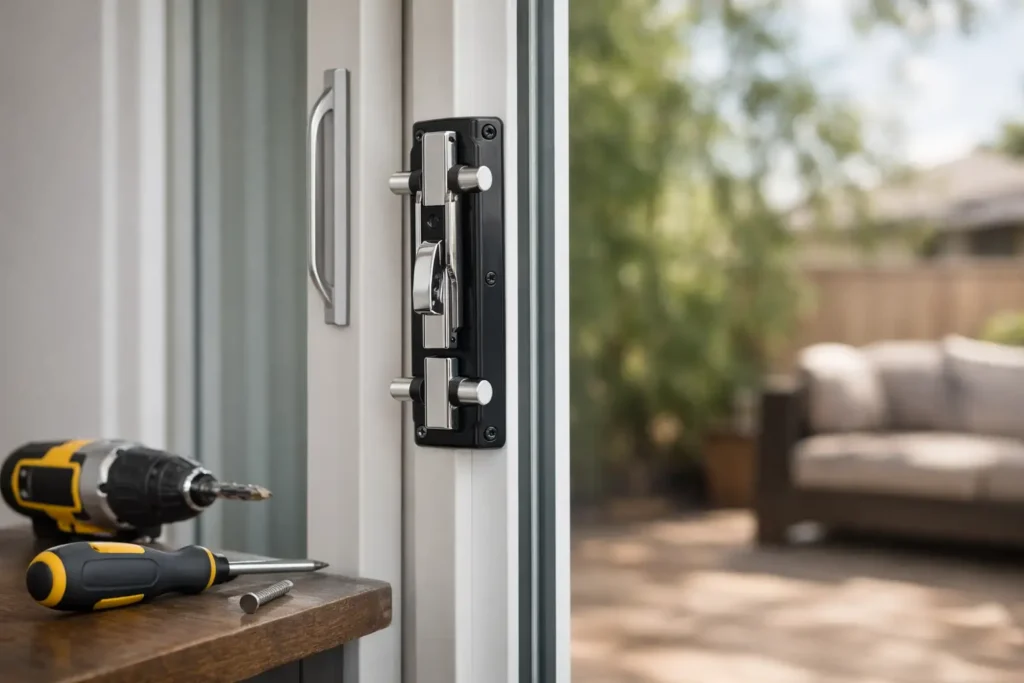
A patio door that looks closed is not always properly secured. If the latch feels loose, the handle wiggles, or the panel can be moved when locked, a sliding door double bolt lock upgrade can be a practical way to improve security without replacing the entire door. For South Florida homeowners, this upgrade is especially worthwhile when an older slider still has good glass and frames but no longer provides the confidence it should.
A better lock is not just about adding a tougher-looking handle. It has to line up correctly with the door panel, the jamb, and the strike area. It also needs a door that rolls, closes, and seats properly. When those parts work together, your sliding glass door is easier to use and harder to force open.
Why older sliding-door locks often fall short
Many original sliding door locks use a single latch point. After years of daily use, humidity, salt air, settling, and wear on rollers, that latch may no longer engage fully. A homeowner may have to lift the panel, push hard on the handle, or pull the door into position just to lock it.
That is not always a lock-only problem. Worn rollers can let a heavy glass panel sag. Dirty or damaged tracks can prevent the panel from closing squarely. A bent keeper, loose handle screws, or worn lock body can add more play. Replacing the lock without addressing those conditions can leave a new part working harder than it should.
A double-bolt lock uses two locking points rather than one. When properly installed, the bolts engage the strike area more securely and help reduce the panel movement that can occur with a worn single-point latch. It is a meaningful upgrade for many patio doors, particularly on ground-floor openings, doors leading to a pool area, and sliders that are frequently used as the main entry to the backyard.
What a sliding door double bolt lock upgrade changes
The value of a double-bolt system is in the way it holds the moving panel against the frame. Instead of relying on one small latch, two bolts engage the keeper. This distributes the holding force and gives the door a firmer locked position.
For homeowners, the day-to-day difference is often easy to feel. The handle should operate cleanly, the door should close without a fight, and the locked panel should have less looseness at the meeting point. The upgrade can also refresh a tired handle set, especially when the existing hardware is corroded, cracked, or difficult to operate.
Security hardware is only one layer of protection. Glass condition, frame strength, installation quality, exterior lighting, and the door’s overall fit all matter. A double-bolt lock does not turn every older slider into a new impact-rated system, and it should not be presented that way. What it can do is address a common weak point in a properly functioning sliding door.
Start with the door, not the lock
Before selecting new hardware, inspect how the door moves. A slider should glide without excessive scraping, dragging, or lifting. It should meet the jamb evenly from top to bottom. If there is a visible gap around one corner when the door is closed, the lock may not align consistently.
Signs the rollers or track need attention first
If the panel is hard to slide, drops when opened, or needs to be lifted to lock, the rollers may be worn or out of adjustment. Older roller assemblies can corrode internally, flatten, or lose their ability to carry the weight of the glass. In many cases, high-quality stainless-steel precision ball-bearing rollers restore smoother movement and help the panel sit at the correct height.
The track also deserves a close look. Sand, pet hair, old lubricant, and outdoor debris can make a door feel heavy. A deeply worn, dented, or damaged track can keep the panel from traveling straight. Cleaning may help with light buildup, but a track with visible damage may need repair or replacement before a lock upgrade will perform as intended.
Check the jamb and strike alignment
The lock bolts must meet the strike or keeper at the right height and depth. If the strike plate is loose, bent, or damaged, the door may seem locked while the bolts are only partly engaged. That is why a professional inspection focuses on the complete system: rollers, track, panel alignment, handle, lock body, keeper, and frame.
This approach can prevent unnecessary replacement. Sometimes the door needs a new lock and keeper. Other times, a simple roller adjustment is what allows a sound lock to work again. A clear recommendation should match the condition of the door, not push a full replacement when a targeted repair will do the job.
Choosing the right double-bolt lock for your slider
Sliding glass doors are not all built the same. Hardware varies by door brand, age, panel thickness, handle mounting holes, mortise opening, backset, and strike configuration. A lock that looks similar online may not fit the existing cutout, may place the handle at the wrong height, or may fail to align with the jamb.
A proper upgrade begins with measuring and identifying the existing hardware. The technician should confirm whether the door can accept a double-bolt mortise lock, whether a compatible handle set is available, and whether the frame will support a secure keeper installation. Finish matters too, particularly in coastal areas where corrosion can quickly affect lower-grade hardware.
Homeowners often ask whether they should add a secondary bar or auxiliary lock as well. It depends on the door and how it is used. An additional device can provide another layer of security, but it should never interfere with safe exit from inside the home. Any added hardware should be easy for household members to understand and operate in an emergency.
When repair is the better value
A sliding door double bolt lock upgrade makes sense when the glass is intact, the aluminum frame is in serviceable condition, and the door can be aligned to close correctly. It can be a cost-effective alternative to replacing a full sliding glass door, especially when the concern is a worn latch, failing handle, or weak original lock.
Replacement may be the better long-term choice when the frame is severely corroded, the panel is warped, the glass has failed, or water intrusion has damaged surrounding components. In hurricane-market housing, homeowners may also be considering broader changes to meet their comfort, storm-protection, or insurance goals. Those are separate decisions from replacing a worn lock, and they should be evaluated honestly.
For many homes, the best result is a focused package of repairs: new rollers to help the door glide, track service to restore a straight path, a solid aluminum handle, and a double-bolt lock that engages correctly. The result is a slider that feels better every time it opens and closes, not just a door with new hardware attached.
Professional installation makes the difference
Lock installation on a sliding door is precise work. The panel may need adjustment, the mortise opening may need careful fitting, and the keeper must be positioned so both bolts engage fully without forcing the handle. Over-tightened screws, poor alignment, or an improperly seated lock can damage hardware and create the same frustrating symptoms the upgrade was meant to solve.
A licensed and insured local specialist can evaluate the complete door, explain the condition in plain language, and recommend only the parts that are needed. At Protech Sliding Doors, that means looking beyond the handle to the rollers, track, frame, and lock engagement before completing the repair. A free estimate gives homeowners a clear starting point, with practical options based on the door in front of them.
If your patio door slides poorly, will not lock firmly, or has hardware that has seen better days, do not wait for the problem to become a security concern. A properly fitted double-bolt lock, supported by a well-aligned sliding door, can bring back the simple reassurance of closing your door, turning the handle, and knowing it is secured.