
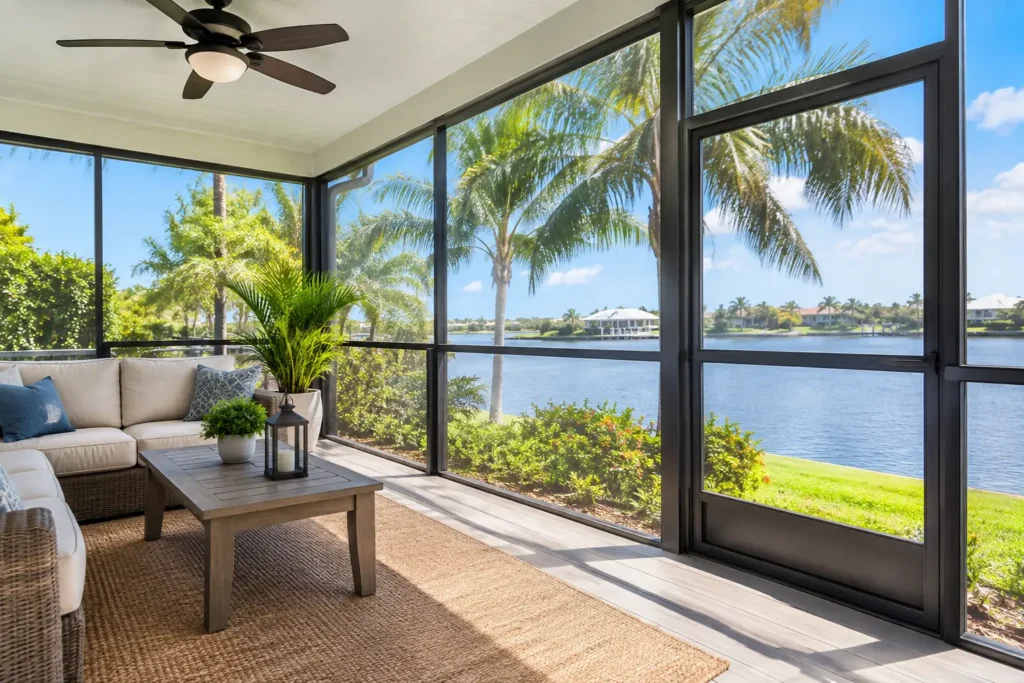
A porch screen can look fine from inside the house while quietly failing where Florida weather hits hardest. Sun-brittle mesh, loose spline, small pet tears, corroded fasteners, and sagging panels all make it easier for mosquitoes, no-see-ums, palmetto bugs, and wind-driven debris to get through. The best screens for Florida porches are not one-size-fits-all. The right choice depends on whether your biggest concern is insects, afternoon heat, privacy, pets, or preserving an open view.
For South Florida homeowners, screen selection should start with how the porch is used. A screened entry that gets occasional traffic has different needs than a pool enclosure, a porch facing the west sun, or an outdoor room where the family eats dinner every night. A professional inspection can also reveal whether the issue is the screen itself or a bent frame, loose track, damaged door closer, or failing sliding screen door.
What Florida Porch Screens Must Handle
Florida screens work harder than screens in many other parts of the country. Intense UV exposure can weaken ordinary fiberglass mesh. Humidity and salt air, especially near the coast, can speed up corrosion on frames and hardware. Frequent rain and gusty storms put pressure on screen panels, spline, and fasteners.
Pests are another local factor. Standard insect mesh may stop many mosquitoes, but very small biting insects can still pass through larger openings. If your porch is near water, landscaping, or a canal, that difference becomes noticeable quickly.
There is also the question of airflow. A tighter mesh improves insect control, but it can slightly reduce breezes and make a porch feel more enclosed. Solar screens cut glare and heat, yet they also darken the view. A good recommendation weighs these trade-offs instead of selling the same material for every home.
Best Screens for Florida Porches by Need
Standard fiberglass insect screen
Standard fiberglass screen remains a practical choice for many covered porches and screen enclosures. It is affordable, provides good ventilation, and keeps out common flying insects. For a porch that has reasonable shade and does not see heavy pet activity or constant impact, it can be a cost-effective repair option.
Its limitation is longevity in direct sun and high-traffic areas. Fiberglass can stretch, tear, or become brittle over time. Homeowners often choose it for straightforward panel replacements, then move to a stronger mesh for doors or lower sections where damage tends to happen first.
No-see-um screen
No-see-um mesh has a finer weave designed to block tiny biting insects that standard screen may not stop. It is one of the best choices for porches near water or yards where evening bugs make outdoor time uncomfortable.
The tighter weave comes with a trade-off: less airflow and a slightly more filtered view. That does not make it a poor choice. It simply means the material is best where insect relief matters more than maximum breeze. Many homeowners use no-see-um screen on the sides of a porch where bugs are worst and choose a more open mesh elsewhere.
Polyester screen for durability
Polyester screen is a stronger upgrade for homeowners who are tired of replacing torn panels. It generally holds up better against stretching, impact, and repeated use than basic fiberglass. This makes it a solid fit around doors, walkways, play areas, and lower panels that see frequent contact.
Durability is especially valuable when a porch is part of daily living space. A screen that stays tight in the frame and resists damage can reduce recurring repair costs. The initial price is usually higher than basic mesh, but it may make more sense than repeated patching and rescreening.
Pet-resistant screen
Pet-resistant mesh is built for homes where dogs or cats lean, scratch, or push against the screen. It is typically thicker and stronger than standard insect screen, helping protect the areas around patio doors and screen doors where pets naturally gather.
This is not a substitute for a secure screen door or proper door hardware. If a dog routinely charges the door, a damaged closer, loose latch, or worn track should be addressed as well. But for panels exposed to claws and everyday contact, pet-resistant screen is often worth the upgrade.
Solar screen for heat and glare
A porch that faces west or south can become difficult to use during bright afternoons. Solar screen helps reduce glare and heat gain before sunlight reaches the porch. It can make the space more comfortable, protect outdoor furniture from fading, and add daytime privacy.
The trade-off is visibility. Solar mesh is darker than standard screen, and the amount of shading varies by material. Homeowners who want a bright, open view may prefer solar screening only on the sun-facing wall. For larger openings, retractable or motorized screens can provide shade when needed without keeping the porch dark all day.
Privacy screen
Privacy screen is useful when neighboring homes, sidewalks, or a busy street look directly onto the porch. It can soften sightlines while still allowing light and air into the space. It is often chosen for side panels, not every wall, so the porch does not feel closed in.
Privacy materials vary widely. Some offer a gentle visual filter, while others provide significant coverage. Before selecting one, stand inside the porch at the times you use it most. Morning sun, nighttime lighting, and the angle of nearby windows can change how much privacy you actually need.
Screen Material Is Only Part of the Job
Even the right mesh will not perform well if the surrounding system is worn out. A clean, tight installation requires sound aluminum framing, properly sized spline, secure corners, and hardware that has not corroded or loosened. On a screened porch with a sliding screen door, smooth rollers, a straight track, and a dependable latch matter just as much as the new screen.
Watch for panels that ripple in the wind, spline that is pulling out of the groove, rust stains near fasteners, or screen doors that drag and fail to close. These are signs that a simple patch may not be the lasting answer. Replacing one damaged panel can be sensible, but widespread sun damage or multiple loose panels may justify a more complete rescreening project.
For coastal homes, it is also wise to ask about corrosion-resistant components. Salt air can shorten the life of ordinary hardware. Quality replacement parts and careful installation help prevent a small screen repair from turning into a recurring problem.
How to Choose the Right Screen for Your Porch
Start with the problem you want to solve. If mosquitoes are the main concern, standard insect screen or no-see-um mesh may be enough. If tiny biting insects are the issue, use the finer mesh where it matters most. If pets damage lower panels, choose pet-resistant screen in those locations. For a hot, exposed porch, solar screening or a retractable shade solution may provide more comfort than insect mesh alone.
Next, consider the porch orientation and traffic level. Sun-facing walls need more UV resistance than shaded walls. Doors, corners, and lower panels need stronger material than high, protected sections. Mixing materials can be a practical way to control cost without compromising the areas that take the most abuse.
Finally, think beyond the screen. If you want the porch open during pleasant weather but shaded during peak sun or private in the evening, a fixed screen may not solve every need. Motorized screens and exterior shades can be a better fit for larger patio openings and homes that use outdoor space year-round.
When Repair Makes Sense and When to Replace
A single tear, popped spline, or isolated damaged panel can often be repaired quickly. It is usually the sensible option when the surrounding mesh remains tight and flexible and the frame is in good condition. Small repairs restore pest control without forcing a larger project.
Replacement is usually the better value when the screen feels brittle, has widespread fading, pulls loose at several points, or has been patched repeatedly. A porch with several aging panels often looks cleaner and performs better after coordinated rescreening than after another round of temporary fixes.
Protech Sliding Doors helps South Florida homeowners evaluate the full condition of porch screens, screen doors, tracks, rollers, and hardware before recommending the work. A free estimate gives you a clear path forward, whether that means repairing one panel or upgrading the porch for better shade, privacy, and everyday comfort.
The best screen is the one that lets you use your porch more often without giving pests, heat, or wear an easy way back in.