
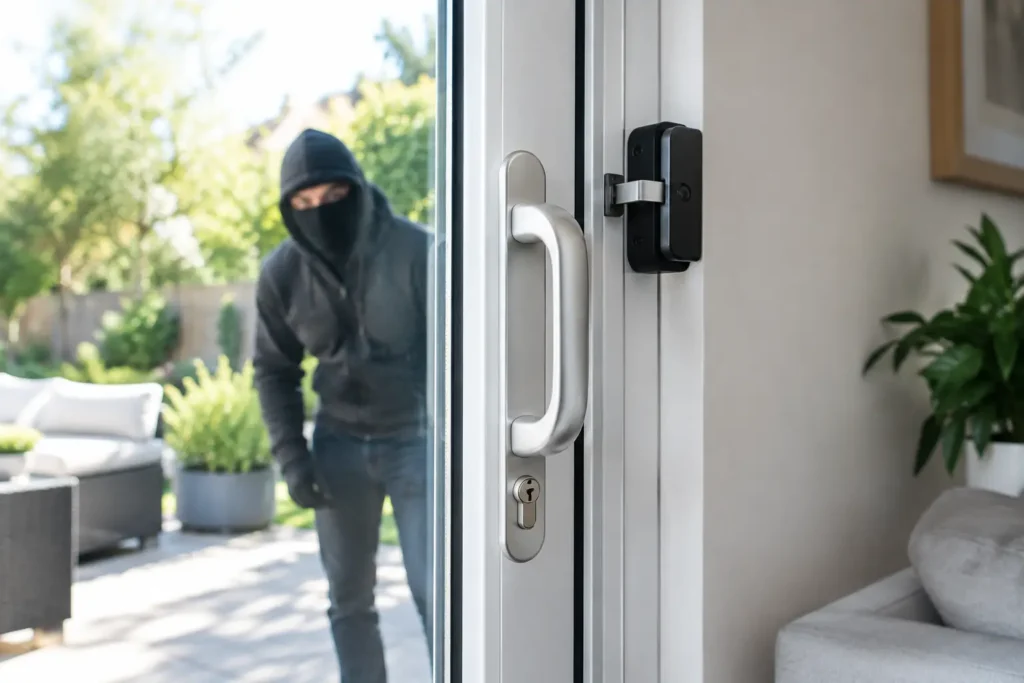
A patio door should give you an easy path to the pool, patio, or screened porch – not a weak point in your home. The best patio door security upgrades do more than add a visible lock. They make the door harder to force, prevent it from lifting or sliding off track, and restore the solid operation that worn rollers, damaged tracks, and loose hardware can take away.
For South Florida homeowners, security also has to work alongside humidity, salt air, frequent use, and storm-season concerns. A door that sticks, rattles, or will not close squarely may look like a minor repair issue, but it can keep the lock from doing its job. The right upgrade starts with how your specific sliding door is operating now.
1. Install a Double-Bolt Patio Door Lock
A quality double-bolt lock is one of the most worthwhile upgrades for a sliding glass door. Unlike a basic latch that may only catch at one point, a double-bolt system secures the door more firmly into the frame. This creates a stronger connection and makes it much more difficult to pry or force the panel open.
This upgrade is especially useful when the original lock is loose, worn, corroded, or no longer lines up with its keeper. Many older patio doors still have the same basic hardware installed decades ago. The handle may feel fine in your hand while the locking mechanism behind it has become unreliable.
A lock upgrade should be matched to the door frame and installed with correct alignment. If the door has sagged on failing rollers or is rubbing against the frame, even a high-quality lock will not engage consistently. Repairing the operating issue first protects the value of the new hardware.
2. Add a Security Bar or Secondary Door Stop
A security bar placed in the lower track provides a simple, effective second layer of protection. When fitted correctly, it physically stops the moving panel from opening, even if someone defeats the primary lock. This is useful at night, when traveling, or for doors leading to a less-visible side yard or patio.
An adjustable metal security bar is generally a better long-term choice than a loose piece of wood. A wood dowel can work temporarily, but it can shift, split, be cut to the wrong length, or get misplaced when the door is in regular use. A properly sized bar should sit firmly without damaging the track or interfering with normal operation.
Keep in mind that a security bar is not a replacement for a working lock. It is a backup. The door should still close fully, latch correctly, and be easy for household members to open quickly in an emergency.
3. Repair Worn Rollers and Damaged Tracks
This may not sound like a security upgrade, but it often is. A sliding door that drags, jumps, or needs to be shoved closed can leave gaps around the frame and prevent the lock from lining up. Some homeowners compensate by lifting the panel, slamming it, or leaving it slightly open because it has become too difficult to use. None of those are secure solutions.
High-quality stainless-steel precision ball-bearing rollers can restore a smooth, controlled glide and help the panel sit at the correct height. When paired with track repair or replacement where needed, the door can close squarely against the frame and allow the lock to engage as designed.
Roller work is particularly relevant in Southeast Florida. Sand, moisture, salt air, and years of patio traffic can wear down components that are out of sight beneath the door panel. Cleaning a track helps with everyday maintenance, but it will not fix flat-spotted rollers, bent track sections, or a door that has dropped out of alignment.
4. Secure the Anti-Lift Hardware and Frame
Sliding patio doors can be vulnerable if the moving panel can be lifted high enough to come out of the lower track. Proper anti-lift devices, correctly adjusted door height, and secure frame components help prevent this type of forced entry.
This is not a one-size-fits-all add-on. The right approach depends on the design of your door, whether it is a standard slider or an impact-rated system, and the condition of the upper and lower tracks. A technician should inspect the frame, panel fit, top guide, and locking area before recommending hardware.
Loose screws, damaged aluminum, or a frame that has shifted can undermine otherwise good security hardware. In some cases, targeted repairs are enough. In others, a heavily worn or damaged door may need more extensive work. A clear inspection helps homeowners avoid paying for a full replacement when a focused repair can restore safe operation.
5. Upgrade Old Handles and Locking Hardware
A cracked handle, stripped screw holes, or a loose latch can make a patio door easier to manipulate from outside. It can also cause a homeowner to avoid locking the door because they do not trust that it will open smoothly later. That is a common problem with older sliders, especially doors used several times a day.
Solid aluminum handles and compatible replacement lock hardware can improve both security and daily use. The goal is not simply a newer-looking handle. It is a handle, lock, and keeper that operate together with no excessive play.
When choosing hardware, avoid selecting solely by appearance. Patio door handles come in different hole spacings, profiles, backsets, and lock configurations. Installing an incompatible part can leave the door looking repaired while still failing to lock properly. Professional fitting is often the most cost-effective route when the door has unusual or older hardware.
6. Consider Glass Protection Based on Your Door Type
The glass itself deserves attention, particularly for patio doors facing a secluded backyard, canal, pool deck, or side patio. Depending on the door and your home’s needs, options may include impact-rated glass, laminated glass, or security film. These choices are not interchangeable.
Impact-rated systems are designed and tested as complete assemblies. They can provide storm protection while offering greater resistance to forced entry, but they are a larger investment and may require replacement of the full door or glass system. They make sense for homeowners already planning a major exterior upgrade or addressing hurricane-market requirements.
Security film can help hold broken glass together, but it does not turn standard glass into an impact-rated door. Its effectiveness depends on film quality, thickness, installation, and whether the edges are properly anchored to the frame. It may be a practical supplemental measure in some situations, but it should not be marketed as a substitute for a properly rated impact system.
7. Improve Visibility, Privacy, and Exterior Lighting
The best patio door security upgrades are stronger when the area outside the door is not a hidden access point. Motion-activated lighting near the patio, side gate, or rear walkway makes activity more visible. Trim back shrubs that block sightlines to the door, and make sure outdoor lighting is aimed where it helps rather than shining into your living room.
Privacy matters too, especially after dark. Motorized shades, blinds, or curtain drop shades can reduce visibility into the home while making it easier to close up the patio at the end of the day. Retractable screens and outdoor shades improve comfort and pest control, but they should never be treated as security barriers. The patio door behind them still needs dependable locks, sound rollers, and proper alignment.
Start With the Door’s Actual Condition
Before buying several products, test your patio door. It should slide without excessive force, close flush with the frame, lock without lifting the panel, and remain firmly seated in the track. Check for a loose handle, corrosion around the lock, worn weatherstripping, gaps at the meeting rail, and any movement when you gently pull on the locked panel.
If the door binds or the lock does not line up, start there. A security bar and brighter light are helpful, but they cannot make up for a sliding panel that is not seated correctly. Protech Sliding Doors can inspect the full system – rollers, tracks, locks, handles, frame alignment, and glass components – and provide a free estimate for the repairs or upgrades that fit the door you already have.
A secure patio door should not require a hard shove, a makeshift stick, or a second guess before bed. When the door glides smoothly and locks firmly, everyday comfort and home security improve at the same time.