
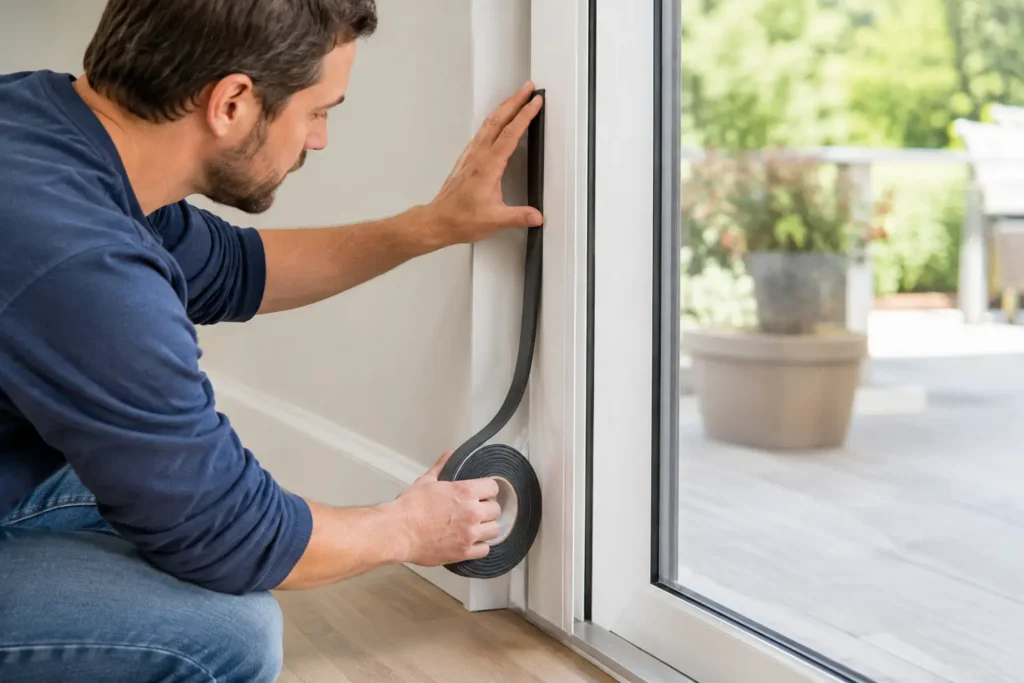
A small opening around a sliding glass door can make a Florida home feel harder to cool, easier for pests to enter, and less secure at night. Learning how to seal patio door gaps starts with finding out why the gap exists. Sometimes fresh weatherstripping solves the problem. Other times, worn rollers, a bent track, a loose frame, or a door that no longer closes squarely is the real cause.
For homeowners across Southeast Florida, the right repair protects more than comfort. It helps keep out wind-driven rain, humidity, ants, palmetto bugs, lizards, and hot outdoor air that makes your AC work overtime.
Start by Finding Where the Air Is Coming Through
Do not assume every draft means the same thing. A sliding patio door has several potential leak points: the vertical edges where the panels meet, the top and bottom of the moving panel, the fixed-panel perimeter, and the threshold. On older doors, gaps can also appear around deteriorated caulk outside the frame.
A simple test can help. On a bright day, stand inside with the door closed and look for daylight around the frame. At night, have someone shine a flashlight from the patio side while you inspect the edges indoors. You can also hold a thin piece of tissue near the door on a breezy day. If it moves, air is getting through.
Check for water stains, soft drywall, discoloration near the threshold, or debris collecting inside the track. These clues may point to water intrusion or poor drainage rather than a straightforward weatherstrip issue. A door that sticks, drags, rattles, or needs to be lifted to lock deserves a closer look before you apply any seal.
Seal Patio Door Gaps With the Right Material
The material has to match the location and the size of the gap. Applying thick foam tape everywhere may seem like a quick fix, but it can prevent a slider from closing properly and may wear out quickly in Florida heat and humidity.
Weatherstripping for the moving panel
Pile weatherstripping, often called fin seal or fuzzy weatherstrip, is commonly used on sliding glass doors. It is designed to seal while allowing the panel to move across the frame. When it becomes flattened, brittle, torn, or missing, outside air and insects can pass through the vertical meeting rails and frame channels.
Choose replacement weatherstripping that matches the width and backing style of the existing material. A strip that is too thin will not seal. One that is too thick can make the door difficult to slide or cause it to sit out of alignment. Clean the channel thoroughly before installing new material so dirt and old adhesive do not interfere with the fit.
Door sweeps and threshold seals
The lower edge of the moving door and the threshold are frequent trouble spots, especially after years of sand, leaves, and moisture have collected in the track. Some doors use a bottom sweep or gasket, while others rely on the door’s adjustment and the threshold design to close tightly.
Avoid blocking weep holes or drainage channels with caulk, tape, or foam. These openings allow water that enters the track to drain to the exterior. Sealing them can trap water, lead to overflow during heavy rain, and create a more expensive repair.
Exterior-grade caulk around the frame
If the gap is between the stationary door frame and the wall or exterior trim, a flexible exterior-grade sealant may be appropriate. Remove loose, cracked, or failed caulk first. The surface should be clean and dry, and the new bead should bridge the joint evenly without covering drainage paths.
This repair is best for a stable frame with localized caulk failure. If the frame is moving, the stucco is cracked, or there are signs of recurring leaks, more investigation is needed. Caulk can hide a symptom for a while, but it cannot correct a damaged installation or a door frame that has shifted.
Fix Door Alignment Before Adding More Seal
A patio door that is out of alignment will defeat even new weatherstripping. When rollers wear down, the panel drops lower in the frame. That can create a gap at the top, leave the interlock loose, make the lock difficult to engage, and allow the panel to rub against the track.
Most sliding doors have adjustment screws near the bottom edges of the moving panel. Small adjustments can raise or lower the door, but this work requires care. Raising one side too far can make the door bind, scrape, or fail to meet the lock correctly. If the rollers are seized, cracked, or badly worn, adjustment alone will not restore a proper seal.
The track matters just as much. A dirty track can make a good door feel heavy, but deep grooves, corrosion, and dents can cause continued roller damage and alignment problems. In that situation, replacing only the weatherstripping is unlikely to give lasting results.
A properly repaired door should slide with controlled, smooth movement, close evenly into the jamb, and allow the lock to engage without forcing the handle. Those are the conditions that let seals do their job.
Know When a DIY Repair Is Enough
Homeowners can often handle a minor weatherstripping replacement or a small section of failed exterior caulk. These repairs make sense when the door slides smoothly, locks normally, sits square in the frame, and has no history of water intrusion.
A professional inspection is the better choice when the gap returns after you replace a seal, the panel is difficult to move, or you can see daylight even when the door appears closed. It is also wise to call for service if rain enters the track and spills indoors, the lock will not line up, or the glass door can be lifted or shaken in the frame.
In South Florida, salt air, humidity, sun exposure, and frequent use can wear down several door components at once. Replacing a flattened strip without addressing failing rollers or a damaged track can become a cycle of temporary fixes. A technician can identify whether the door needs an adjustment, new high-quality rollers, track repair, replacement weatherstripping, or a combination of repairs.
Do Not Ignore Security Gaps
A door gap is not always just an energy or pest issue. When a slider does not close fully against its frame, the lock may not engage as designed. Loose interlocks and misaligned latches can reduce the door’s resistance to forced entry.
Check that the primary lock closes firmly and that the door cannot be lifted enough to disengage from the track. If your current lock is worn or basic, a double-bolt lock upgrade can add another layer of protection. Security improvements should be matched to the condition and alignment of the door itself. A stronger lock cannot compensate for a panel that is sagging on failed rollers.
Maintain the Seal After the Repair
Once the gaps are corrected, simple maintenance helps the repair last. Vacuum loose grit from the tracks regularly, then wipe them with a damp cloth and dry them before applying any lubricant recommended for your door components. Heavy grease attracts sand and dirt, which can quickly make rollers and tracks work harder.
Inspect weatherstripping a few times a year, particularly after storm season. Look for compressed pile, splits, loose adhesive, missing sections, or material that no longer makes contact when the panel closes. Keep outdoor furniture, planters, and mats from directing water against the threshold or blocking track drainage.
If your patio door is heavy, noisy, hard to lock, or letting in rain and insects, do not keep adding temporary tape and foam. Protech Sliding Doors can inspect the complete system and recommend a practical repair that restores a tighter seal, smooth operation, and dependable daily use. A door that closes correctly makes the patio feel like part of your home again, not a source of heat, pests, and worry.