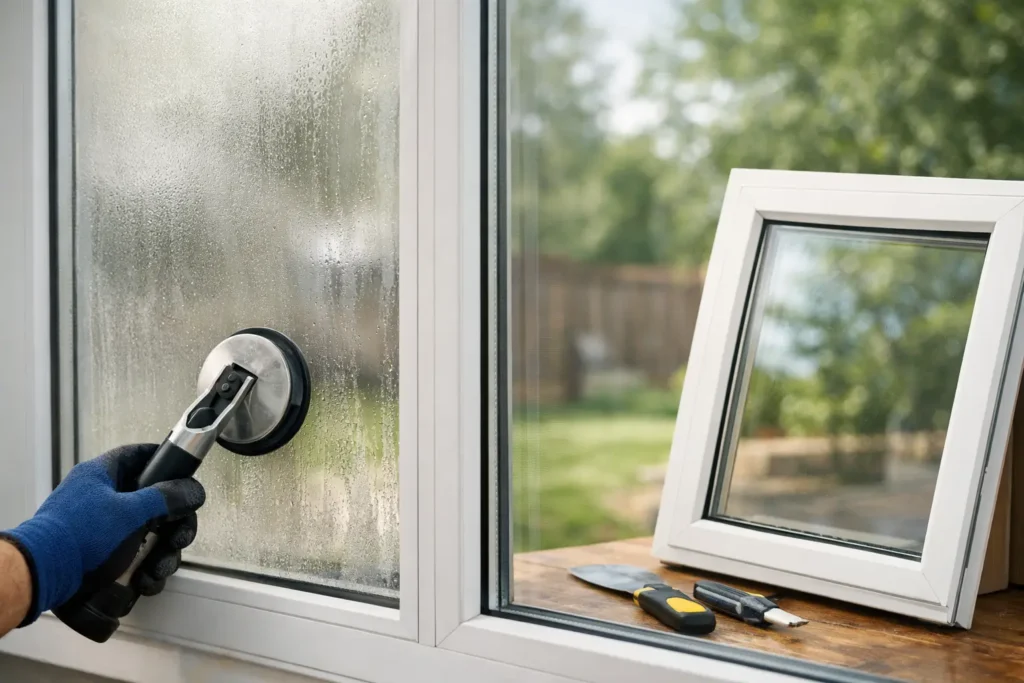
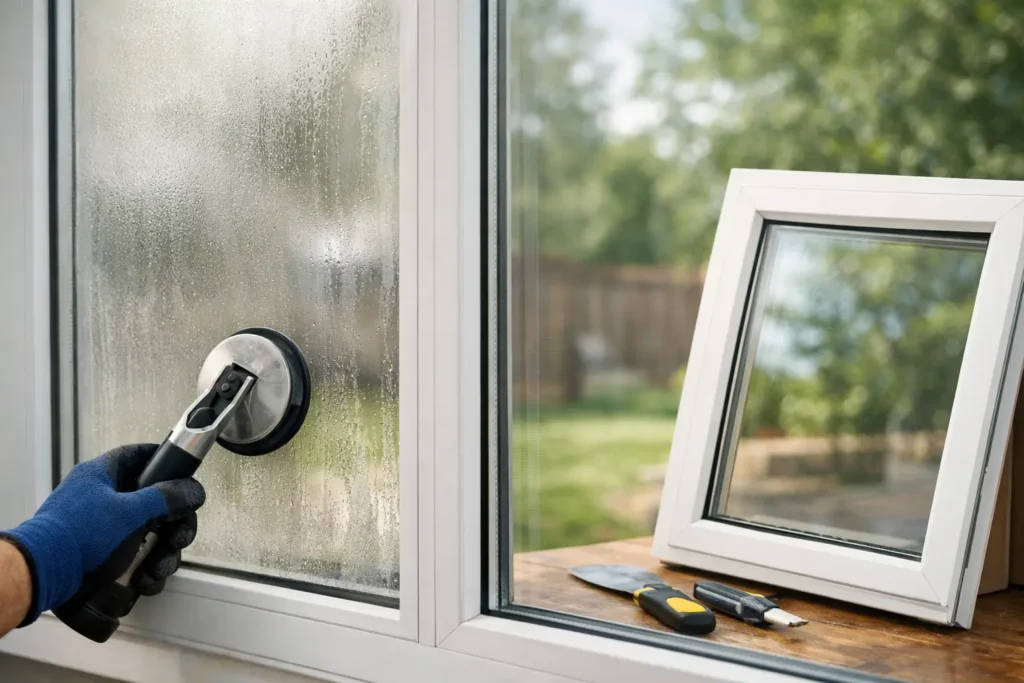
A cloudy patch inside your patio door or window is not dirt you can wipe away. It is usually moisture trapped between insulated glass panes, and fogged glass repair begins with identifying why that sealed space failed. In Southeast Florida, constant heat, humidity, heavy rain, and sun exposure can put years of strain on glass seals, especially in older sliding doors and windows.
The good news is that fogged glass does not automatically mean you need a whole new door or window. In many cases, the frame, track, hardware, and surrounding structure are still in good shape. Replacing the failed glass unit can restore a clear view, improve comfort, and help you avoid the cost of a full replacement.
What Causes Glass to Fog Between Panes?
Most modern residential windows and sliding glass doors use insulated glass units, often called double-pane glass. Two pieces of glass are separated by a spacer and sealed around the edges. The air space between the panes is designed to provide insulation, reduce heat transfer, and keep moisture out.
When that perimeter seal breaks down, humid outside air can enter the space between the panes. Once temperatures change, moisture condenses on the inside surfaces of the glass. That creates the familiar hazy, streaky, or milky appearance homeowners notice in the morning sun or when looking toward the pool, patio, or yard.
Seal failure can happen for several reasons. Age is the most common factor, but South Florida weather can speed up the process. Direct UV exposure, thermal expansion, wind-driven rain, hurricane-season pressure changes, and regular movement in a large sliding door all affect the seal over time. A prior impact, frame damage, or poor installation can also contribute.
Fogging is different from ordinary surface condensation. If you can clean the moisture from the room side or exterior side of the glass, the insulated unit may be fine. If the cloudiness stays trapped inside, the seal has likely failed.
Why Fogged Glass Is More Than a Cosmetic Problem
A fogged pane can make an otherwise beautiful room feel neglected. It reduces the view from your living room, bedroom, or patio door and can make natural light look dull. But the issue is not only appearance.
Once an insulated glass seal fails, the unit is no longer performing as intended. Heat can move through the glass more easily, which matters in Florida homes that run air conditioning for much of the year. The moisture may also leave mineral deposits or staining between the panes. In advanced cases, the haze becomes permanent even when conditions are dry.
Homeowners selling, renting, or maintaining a property should also consider the impression fogged glass creates. A cloudy slider can make prospective buyers or tenants wonder whether other maintenance has been delayed. Replacing failed glass is often a targeted improvement that helps the home look cared for without replacing components that still work.
Fogged Glass Repair Options
The right repair depends on the type of glass, the condition of the frame, and whether the door or window has other problems. A qualified technician should inspect the complete unit before recommending a solution.
Replacing the Insulated Glass Unit
For many residential doors and windows, replacing the insulated glass unit is the most dependable repair. The failed double-pane section is removed and replaced with a properly sized new unit while the existing frame remains in place.
This is often a cost-effective option when the aluminum or vinyl frame is structurally sound and the door operates well. It restores clear glass and insulating performance without the expense, demolition, and disruption of installing an entirely new patio door or window.
For sliding glass doors, measurements matter. Glass must fit the panel correctly, and the panel needs to be handled carefully to avoid frame damage or unsafe installation. If the door includes tempered glass, tinted glass, low-E glass, decorative grids, or impact-rated components, the replacement glass must match the application and applicable requirements.
Repairing the Door Along With the Glass
Fogged glass can be the issue you see first, but it may not be the only issue the door has. If a sliding door is difficult to open, drags across the track, rattles, or does not lock securely, replacing only the glass may leave you with a clearer view and the same daily frustration.
A practical inspection looks at the full door system: rollers, track condition, locks, handles, alignment, weatherstripping, and the glass panel. Worn rollers can force a heavy door to scrape along the track. Damaged tracks can make even new rollers wear out quickly. A loose or outdated lock can affect security regardless of how good the glass looks.
When repairs are needed, combining the work can save time and reduce repeat service calls. High-quality stainless-steel precision ball-bearing rollers, properly adjusted door panels, and a dependable lock upgrade can help a patio door glide smoothly and close securely again.
Full Door or Window Replacement
A full replacement makes more sense when there is widespread frame corrosion, significant structural damage, repeated water intrusion, major track failure, or multiple components nearing the end of their service life. It may also be the better choice when a homeowner wants to change the style, improve energy performance, or upgrade to impact-rated products as part of a larger renovation.
That does not mean replacement is always necessary because one pane is fogged. Recommending a full door replacement for a repairable insulated glass failure can add unnecessary cost. The best decision comes from the condition of the entire assembly, not from the fog alone.
Can Fogged Glass Be Fixed Without Replacing It?
You may see methods advertised that involve drilling small holes into the glass, venting the moisture, cleaning the interior surfaces, and resealing the holes. This approach can sometimes improve the appearance temporarily, but it does not restore the original sealed insulated-glass performance. Residue may remain, and the unit can fog again.
For a long-term residential repair, replacing the failed insulated glass unit is generally the more reliable choice. It addresses the compromised seal rather than trying to work around it. This is especially true for larger sliding door panels, where clear visibility, safe glazing, and dependable performance matter every day.
How to Tell Whether You Need Service Now
Schedule an inspection if the haze is getting worse, the glass looks dirty from every angle, or you see moisture droplets between panes. You should also have the door or window checked promptly if the fogging appears after a crack, impact, water leak, or frame damage.
There are a few signs that point to a broader door problem: the panel is hard to slide, the lock does not engage consistently, the frame is loose, or water enters during heavy rain. These conditions deserve attention before they cause additional track damage, security concerns, or interior moisture issues.
For homes near the coast, salt air can also affect aluminum frames, fasteners, rollers, and hardware. A clear pane is valuable, but smooth operation and secure locking are part of the same long-term maintenance picture.
What to Expect From a Professional Glass Inspection
A proper visit should start with straightforward questions: Is the fog inside the glass? Is the glass cracked? Does the panel slide normally? Is the frame in good condition? From there, the technician can take measurements, identify the glass type, and explain whether glass replacement, hardware repair, or a complete replacement is warranted.
Ask for a clear estimate that separates necessary work from optional upgrades. For example, if the glass unit has failed but your rollers and lock are working properly, you may only need the glass replaced. If rollers are worn and the lock is outdated, it may be worthwhile to address those items while the panel is being serviced.
At Protech Sliding Doors, the goal is to recommend the repair that fits the actual condition of the door or window, not push a replacement when a durable repair will do the job. Licensed and insured local service, careful measurements, quality parts, and a clean work area make a noticeable difference in a project that involves large glass panels.
Protecting Your New Glass and Door Components
New insulated glass still needs a sound surrounding frame and drainage path. Keep door tracks reasonably clean so water and debris do not build up around the panel. Avoid slamming sliding doors, since repeated impact can stress the frame, rollers, and glass seals.
Do not use abrasive pads, harsh chemicals, or metal tools on glass and frame surfaces. For routine cleaning, a soft cloth and a glass-safe cleaner are usually enough. If the door becomes difficult to move, do not keep forcing it. Early roller or track service is usually simpler and more affordable than waiting until the panel damages the track.
A fogged patio door can make a home feel closed off from the outdoor space you enjoy. Getting the right diagnosis lets you restore the view, maintain comfort, and keep your existing door working safely for the years ahead.