
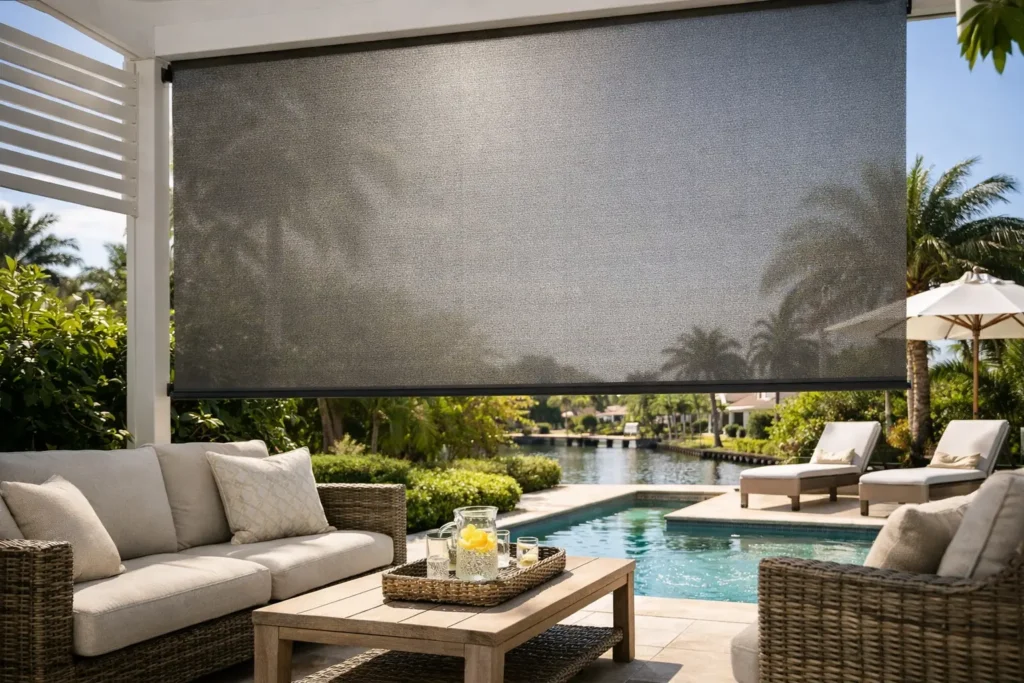
By midafternoon in South Florida, a patio can go from inviting to unusable. Direct sun heats pavers, fades outdoor furniture, creates glare on sliding glass doors, and sends heat straight into the home. The best sun blocking patio shades reduce that exposure without closing off the fresh air, view, or easy access that make outdoor spaces worthwhile.
For most homeowners, the right choice is not simply the darkest shade available. It depends on where the sun hits, whether the patio is screened or open, how much wind the area receives, and whether privacy, bug control, or automation matter as much as heat reduction. A good shade system should fit the way you actually use the space and stand up to Florida humidity, rain, and daily operation.
What Makes a Patio Shade Effective Against Sun?
A patio shade works best when it stops solar heat and glare before they reach the glass, floor, furniture, or seating area. Exterior shades generally outperform interior window coverings for a sun-exposed patio because they intercept sunlight outside the home. They can also make the view through a sliding door more comfortable during the brightest hours.
Fabric openness matters. A tighter weave blocks more sun, wind-blown debris, and outside visibility, but it also reduces airflow and can make the patio feel more enclosed. A more open solar screen maintains a clearer view and better ventilation while still cutting glare. Neither option is automatically better. A west-facing patio that gets harsh afternoon sun may need a denser material than a covered porch that only needs modest glare control.
Color also affects performance and appearance. Darker exterior screen fabrics often provide better outward visibility because they reduce reflected light, while lighter colors may look brighter from inside. The right fabric should be selected for the direction of the sun, your privacy needs, and the look of the home rather than color alone.
Best Sun Blocking Patio Shades by Patio Type
Motorized Retractable Screens
Motorized retractable screens are one of the most flexible choices for patios, lanais, covered outdoor rooms, and large openings. At the touch of a button, the screen lowers to block low-angle sun and glare, then retracts when you want a fully open view. For Florida homeowners who use their patio at different times of day, that convenience can make a real difference.
Solar screen fabrics can reduce heat and glare while allowing air to move through the space. Depending on the material selected, they can also provide daytime privacy and help keep insects out when the screen is designed for pest control. Side tracks or guided systems are especially valuable because they keep the fabric aligned and help prevent gaps along the edges.
The trade-off is cost and installation complexity. Motorized systems need proper measurements, secure mounting points, and electrical planning. A screen that is too loose, poorly aligned, or installed on an unsuitable structure may not operate reliably. For wide openings and frequent use, professional installation is usually the better long-term value.
Exterior Curtain Drop Shades
Curtain drop shades are a practical solution for covered patios, pergolas, balconies, and screen enclosures. They lower vertically from above and can be operated manually or with a motor. When positioned on the sunny side of a patio, they create a noticeable barrier against direct afternoon heat without requiring a permanent wall.
These shades are a strong fit for homeowners who want more privacy from nearby properties or pool areas. They can be lowered partway to stop glare at seated eye level, or fully lowered when the sun is strongest. That adjustability is useful when a patio faces east or west, where the sun stays low and pours in from the side.
Ask about bottom bars, tie-downs, and side retention options. In South Florida, a free-hanging shade may move in a breeze, which can be distracting and can increase wear over time. A guided system is often worth considering for exposed patios. It is also wise to confirm how the shade should be secured before storms. Patio shades are comfort products, not hurricane protection unless a specific product has been engineered, tested, and approved for that purpose.
Motorized Retractable Awnings
A retractable awning is often the best answer when the biggest problem is overhead sun on an open patio. It extends outward from the home to create broad shade over seating, dining areas, and sliding glass doors. By shading the patio surface and door glass, an awning can make the transition between indoor and outdoor living much more comfortable.
Motorization makes an awning easier to use consistently. Some systems can include wind sensors that retract the awning when conditions become too gusty. That feature is helpful, but it should not replace homeowner attention during changing weather. Retractable awnings need to be brought in before storms and when wind conditions exceed the manufacturer’s limits.
An awning does not solve every sun problem. It provides excellent overhead coverage, but low morning or late-afternoon sun can still enter from the sides. Many homeowners get the best result by pairing an awning with a vertical drop shade or retractable screen on the exposed side of the patio.
Outdoor Roller Shades and Solar Blinds
Outdoor roller shades and solar blinds are a clean, straightforward option for smaller patio openings, covered porches, and areas where a full retractable-screen system is not necessary. They can reduce glare on televisions, block direct rays from a sitting area, and add privacy near a property line.
Manual shades cost less upfront and may be perfectly suitable for a small, protected opening. Motorized versions are easier to operate on larger patios, high openings, or multiple shades. They are also convenient for homeowners who want to lower every shade before the afternoon sun reaches the patio without walking from opening to opening.
For exterior use, make sure the components are designed for moisture, heat, and corrosion exposure. South Florida’s salt air can be especially hard on low-quality hardware near the coast. Quality mounting brackets, proper fasteners, and a correctly tensioned shade help avoid sagging, sticking, and premature replacement.
Choosing the Right Openness and Level of Privacy
Shade fabric is often described by its openness factor, which refers to the amount of open space in the weave. Lower openness blocks more light and provides greater privacy. Higher openness allows more visibility and light through the fabric. As a general rule, a 1% to 3% fabric is useful where privacy and strong sun reduction are the priority, while a 5% to 10% fabric can preserve a more open view.
The best choice depends on what is outside the patio. If your view is a canal, pool, or landscaped yard, a more open solar fabric may keep the space from feeling closed in. If the patio looks directly toward neighboring windows or a busy street, a tighter fabric can provide needed privacy. Keep in mind that daytime privacy is different from nighttime privacy. When lights are on inside or under a covered patio, many screen fabrics allow more visibility from the outside.
Measure More Than the Opening
Patio shade installation is not just a matter of measuring width and height. The structure needs enough solid mounting surface to support the unit and resist regular movement. On a screened enclosure, the frame condition, existing screen channels, roof line, and door swing all matter. On a stucco wall, installers need to locate appropriate attachment points and use hardware suited to the wall construction.
Also consider how the shade will interact with sliding patio doors. A shade should not interfere with a door handle, lock, track access, or the path of a screen door. If the slider already sticks, has worn rollers, or has damaged tracks, fixing those issues before adding a shade helps keep the entire opening easy to use. A comfortable patio should not come at the cost of a door that no longer glides properly or locks securely.
When Professional Installation Is Worth It
A small manual shade on a sheltered patio may be a reasonable do-it-yourself project. Larger motorized screens, retractable awnings, and guided drop shades deserve a professional inspection first. Correct installation affects how smoothly the system runs, how well it handles normal wind, and how long the fabric and motor last.
A qualified local installer can recommend a system based on the exact sun exposure, opening dimensions, mounting conditions, and desired level of privacy. At Protech Sliding Doors, the goal is to help homeowners choose an outdoor-shading solution that works with their patio doors, screens, and daily routine, not to push a one-size-fits-all product.
The best patio shade is the one you will use. Choose a durable system that blocks the hours of sun you actually deal with, keeps the patio accessible, and gives you a cooler place to sit when Florida afternoons are at their hottest.