
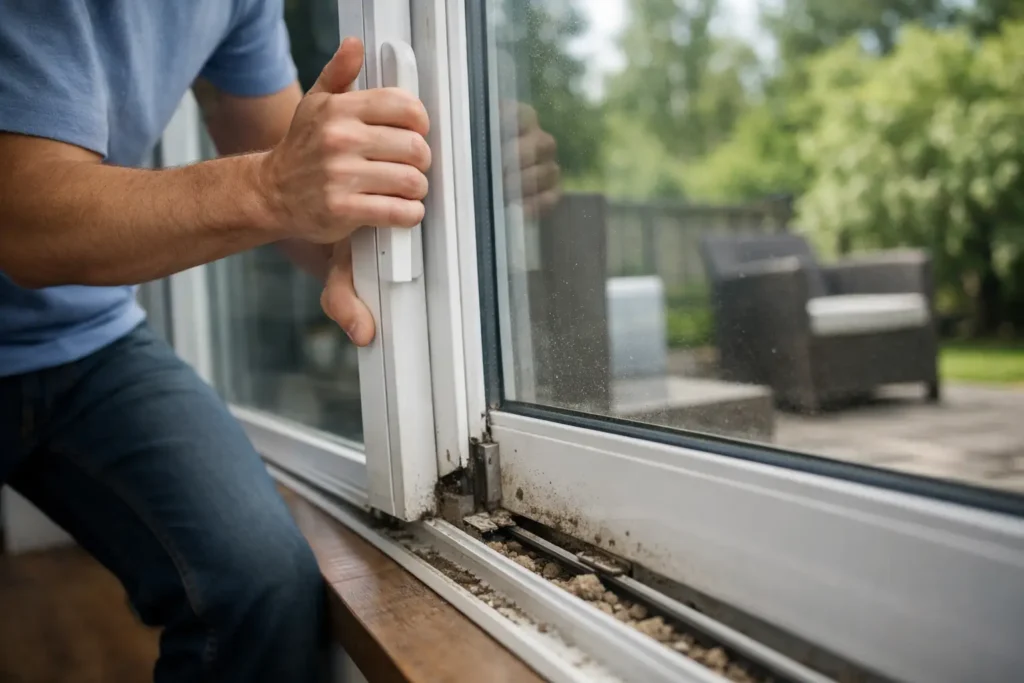
That heavy pull across the patio is more than a daily annoyance. A sliding glass door hard to slide can leave you struggling to let the dog out, enjoy the patio, or secure your home at night. In many South Florida homes, the problem starts small, then gets worse as worn parts grind against the track.
The good news is that a hard-to-move slider does not automatically mean you need a new door. Dirty tracks, failing rollers, loose hardware, and track damage are common repair issues. The right diagnosis matters because forcing a door can turn a straightforward repair into a more expensive problem involving glass, frame, or track replacement.
What Makes a Sliding Glass Door Hard to Slide?
A patio door should move with steady, reasonable effort. When it drags, sticks, scrapes, or needs a hard shove to open, something is preventing the door panel from rolling correctly. The most common cause is worn or broken rollers.
Rollers carry the weight of the glass door panel as it moves along the bottom track. Older rollers may corrode, flatten, seize, or lose their bearings. Florida humidity, salt air near the coast, rainwater, sand, pet hair, and everyday dirt all speed up wear. When a roller stops turning freely, the door drags rather than glides.
A dirty track can also make a door feel heavy. Grit collects in the narrow channel where the rollers travel. But cleaning alone is not always the answer. If the door remains difficult to move after the track is cleaned, the rollers or track may already be damaged.
Track condition is especially important. A dented, cracked, corroded, or deeply worn track creates resistance with every opening and closing. Continuing to run worn rollers over a damaged track can make both parts fail faster.
Signs the Problem Is More Than a Dirty Track
It is reasonable to vacuum loose debris from the bottom track and wipe it with a damp cloth. This basic maintenance can improve door operation when dirt is the only issue. Avoid filling the track with heavy grease or oily products, though. They can attract more grit and create a sticky mess over time.
If the door still resists movement, listen and watch closely. Grinding sounds, metal-on-metal scraping, a panel that drops or lifts as it moves, and a door that comes off alignment are all signs of a mechanical problem. A door that only opens with two hands is not operating normally.
You may also notice that the lock no longer lines up correctly. This can happen when worn rollers allow the panel to sit too low or unevenly in the frame. It is tempting to force the lock or slam the door into place, but that can damage the lock, handle, and frame. A sliding door should close fully and lock without a struggle.
Why Forcing the Door Is a Bad Fix
Glass patio doors are heavy. Applying extra force to a dragging panel puts pressure on the handle, lock, frame, rollers, and glass. In some cases, homeowners pull so hard that the handle loosens or breaks before the real issue is addressed.
Forcing the door can also score the track. Once a track is badly worn, even new rollers may not perform as they should without track repair or replacement. The earlier the issue is inspected, the more likely it is that a targeted repair will restore smooth operation.
There is also a safety concern. A door that will not close or lock properly can compromise home security. If the existing lock is weak, damaged, or outdated, repairing the door is a good time to consider a double-bolt lock upgrade. Smooth operation and reliable locking should go together.
The Parts That Usually Need Attention
A professional sliding-door inspection looks beyond the visible dirt in the track. The technician should check the door panel height, roller condition, track surface, frame alignment, handles, locks, and glass clearance.
Roller replacement is one of the most common repairs. High-quality stainless-steel precision ball-bearing rollers are designed for smooth movement and better resistance to corrosion. They are a worthwhile upgrade over low-grade parts that may fail quickly in humid coastal conditions.
Track repair may be needed when the surface is bent, rough, or worn down. Depending on the door and the extent of the damage, a track can sometimes be repaired without replacing the entire door. This is why an in-home inspection is valuable: the best fix depends on whether the issue is isolated to rollers, the track, or several components working together.
Hardware should not be overlooked. A loose handle, failing latch, or misaligned lock can make a door feel harder to operate even after roller work is completed. Repairing all related components at the same visit can save repeat service calls and help the door work as it should.
When Cleaning Helps and When to Call a Professional
Homeowners can safely handle routine cleaning. Vacuum the track, remove loose sand and leaves, and clean the channel with mild soap and water. Check the visible weatherstripping for debris, and make sure no outdoor rug or furniture is blocking the door path.
Call a sliding-door specialist when the panel is heavy, scraping, out of alignment, difficult to lock, or visibly sitting low in the frame. Do not try to remove a large glass panel without the right tools and experience. Sliding glass door panels are heavy, awkward, and easy to damage during removal or reinstallation.
A professional repair typically involves lifting and removing the door panel, inspecting the rollers and track, replacing failed components, adjusting the door height, and testing the lock and operation. The goal is not simply to make the door move a little better. The goal is a door that glides smoothly, closes correctly, and locks securely.
Repair or Replacement: Which Makes Sense?
Most sticking patio doors can be repaired, especially when the glass, frame, and overall structure are in good condition. Replacing rollers, repairing a track, and upgrading worn locks or handles is often much more cost-effective than replacing the entire sliding glass door.
Replacement may be the better choice if the frame is severely corroded, the glass is broken or has failed between panes, the track is beyond practical repair, or the door no longer meets your needs for impact protection, insulation, or appearance. A knowledgeable technician should explain the condition of the existing door clearly instead of pushing replacement when a repair will do the job.
For rental properties and busy households, timely repair is usually the practical choice. It prevents a small operating issue from becoming a tenant complaint, security concern, or larger construction project. For homeowners planning upgrades, it can also be a good opportunity to coordinate patio-door repairs with new screens, retractable screens, shades, or outdoor comfort improvements.
Keep Your Slider Moving Smoothly in South Florida
Once the repair is complete, a little maintenance helps protect it. Keep the track clear of sand, leaves, and pet hair, particularly after storms. Wipe up standing water near the track and avoid slamming the panel. If the door begins to feel heavier again, arrange service before it starts grinding.
For Southeast Florida homeowners, a smooth sliding door is part of everyday comfort. It connects the living room to the patio, lets in light, and makes outdoor living easier. Protech Sliding Doors provides free estimates for roller, track, lock, handle, glass, and screen repairs, with practical recommendations based on the condition of your door.
A patio door should not require a workout to open. Address the drag early, use quality parts, and you can get back to a door that glides effortlessly when you need it.