
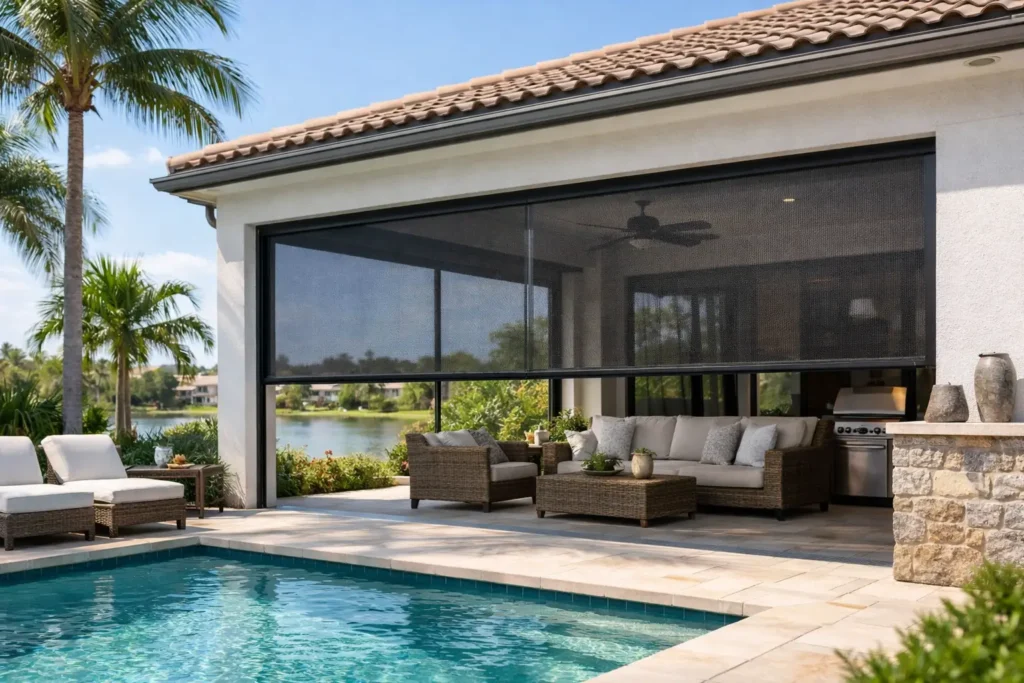
A South Florida patio can be the best room in the house until late-afternoon sun, mosquitoes, windblown debris, or a neighbor’s clear view makes it hard to enjoy. Motorized patio screens give homeowners a practical way to control those conditions without permanently closing off the space. At the touch of a wall switch, remote, or compatible smart-home control, the screen lowers when needed and retracts when the view and breeze are worth keeping.
For patios, lanais, balconies, covered outdoor kitchens, and screen enclosures, this is not simply a convenience upgrade. The right motorized screen can make an outdoor area more usable through more hours of the day while helping protect furnishings and add a measure of privacy. The key is choosing the screen fabric, mounting method, and control system for how the space is actually used.
What Motorized Patio Screens Do Well
A motorized patio screen is a retractable screen system housed in a protective cassette above an opening. The fabric travels down guided side tracks and stops at the desired height or closes fully at the bottom. When retracted, it rolls neatly into the housing rather than taking up floor space or requiring panels to be moved by hand.
In Southeast Florida, homeowners most often choose these systems for solar control, insect protection, privacy, and wind-driven rain reduction. They can be especially useful on west-facing patios that become too hot in the afternoon, or on outdoor dining areas where mosquitoes show up just as the meal begins.
The benefit depends on the fabric. An insect screen is designed to keep pests out while allowing more air circulation. A solar screen filters glare and heat while retaining some outward visibility. Privacy fabric provides a more sheltered feel, though it typically reduces light and the view more than an open-weave solar material. Clear vinyl-style weather panels are another category and should be considered separately, since they behave differently in heat, wind, and humidity.
Motorization makes the screen much more likely to be used. A manually operated screen may stay open because lowering it feels inconvenient, especially across a wide opening. With a motorized system, homeowners can lower the screen before the sun reaches the patio, raise it for a clear view, or close several openings quickly when bugs become a problem.
Choosing a Screen for Your Patio, Not Just the Catalog
The best-looking fabric sample is not always the best choice for the opening. Before selecting a system, consider sun direction, opening width and height, patio roof structure, exposure to wind, and whether the goal is shade, privacy, insects, or a combination of all three.
Solar control versus airflow
Darker solar fabrics often improve outward visibility and glare reduction, while lighter colors can brighten the patio from the outside. Openness factor also matters. A more open weave admits more light and airflow but provides less shade and privacy. A tighter weave blocks more sun but can make the area feel more enclosed.
For a breezy covered patio, many homeowners prefer a fabric that cuts harsh sun without turning the area into a dark room. For a patio that faces a close neighbor or a busy street, a more private screen may be the better fit. There is no universal best option because comfort is personal and each home receives sun differently.
The frame and guide tracks matter
A motorized screen is only as dependable as the system holding it in place. The housing, side tracks, fasteners, and bottom bar must be properly sized and securely mounted to the patio structure. This is particularly important for broad openings and homes exposed to coastal weather.
Guided-track systems help keep fabric aligned as it travels. They also provide a cleaner appearance and better edge coverage than loosely hanging shades. Installation should account for uneven surfaces, existing columns, stucco, aluminum framing, and door clearances so the screen does not interfere with sliders, handles, or traffic through the opening.
Controls should fit daily life
A basic remote control works well for many homes. Wall switches offer a familiar, permanent control point near a patio door. Smart-home-compatible motors can allow scheduling, scene controls, or operation from a phone, depending on the system selected.
Automation is useful when it solves a real problem. A schedule that lowers solar screens during the hottest afternoon hours can protect outdoor furniture and make the patio more comfortable before anyone walks outside. But every added feature introduces another component to set up and service, so homeowners who value simplicity may prefer a quality remote and manual limits over a complex control package.
Florida Weather Changes the Installation Conversation
Motorized screens are made for shade, privacy, and insect control. They are not a substitute for impact-rated shutters, storm panels, or hurricane protection. This distinction matters in South Florida, where a patio opening can face intense wind and driving rain during severe weather.
Most screen systems should be retracted when high winds or a tropical system is expected unless the manufacturer specifically states otherwise for that product. Leaving a screen deployed in conditions beyond its rating can damage the fabric, tracks, motor, mounting points, or surrounding structure. A professional installer should explain the product’s operating limits clearly rather than suggesting that every retractable screen is built for every weather event.
Salt air, humidity, and afternoon storms also affect maintenance. Aluminum components are well suited to outdoor use, but hardware, tracks, electrical connections, and screen fabric still need occasional attention. If a system is installed near a pool or close to the coast, regular cleaning is even more valuable.
Professional Measurement Prevents Expensive Frustration
A motorized patio screen is a custom-fit product. Small measurement errors can create gaps, rubbing fabric, poor alignment, or a bottom bar that does not seat correctly. An in-home evaluation allows the installer to measure the finished opening, inspect the mounting surfaces, confirm access to power, and identify obstacles such as light fixtures, fans, gutters, door handles, or uneven pavers.
It also helps determine whether the patio structure is ready for the system. For example, an aluminum enclosure may need reinforcement or a different mounting approach. A masonry opening may require specific anchors. A wide opening may call for separate screens rather than one oversized unit. These decisions affect appearance, reliability, and cost.
At Protech Sliding Doors, recommendations are based on the condition and use of the opening, not on pushing a one-size-fits-all upgrade. A free estimate gives homeowners a chance to compare practical options before committing to an installation.
Care That Helps Screens Operate Smoothly
Motorized screens are designed for routine use, but they should not be treated like a garage door or a storm barrier. Keep furniture, planters, and grill covers clear of the bottom bar’s travel path. Do not force the fabric if it catches or stops unevenly, since continued operation can worsen a small alignment issue.
A gentle rinse and soft cloth can remove dust, pollen, salt residue, and insect debris from the housing and tracks. Avoid harsh chemicals, abrasive pads, and pressure washers directed at the fabric, motor housing, or track seals. If leaves or sand collect in the tracks, clear them carefully so the screen can travel freely.
Call for service if the screen begins running slower than usual, stops short of its set position, makes grinding sounds, wrinkles along one edge, or moves out of its guide track. Many issues are easier and less costly to correct early, before the fabric or motor is damaged.
When a Motorized Screen Is Worth the Investment
Motorized patio screens are most valuable when they solve a recurring problem. If a family avoids the patio from 3 p.m. until sunset, shade control can change how often that space gets used. If insects cut short evening gatherings, retractable bug protection can make outdoor dinners feel realistic again. If a patio is visible from neighboring homes, a privacy screen can create a more comfortable place to relax without permanent walls.
They may be less necessary for a small, fully shaded patio that is rarely used or for an opening exposed to conditions beyond the system’s intended wind rating. In those situations, a fixed screen, awning, conventional shade, or a different patio improvement may provide better value.
The right system should feel simple after installation: lower it when the sun is harsh, raise it when you want the view, and enjoy a patio that works more like the living space you intended it to be.