
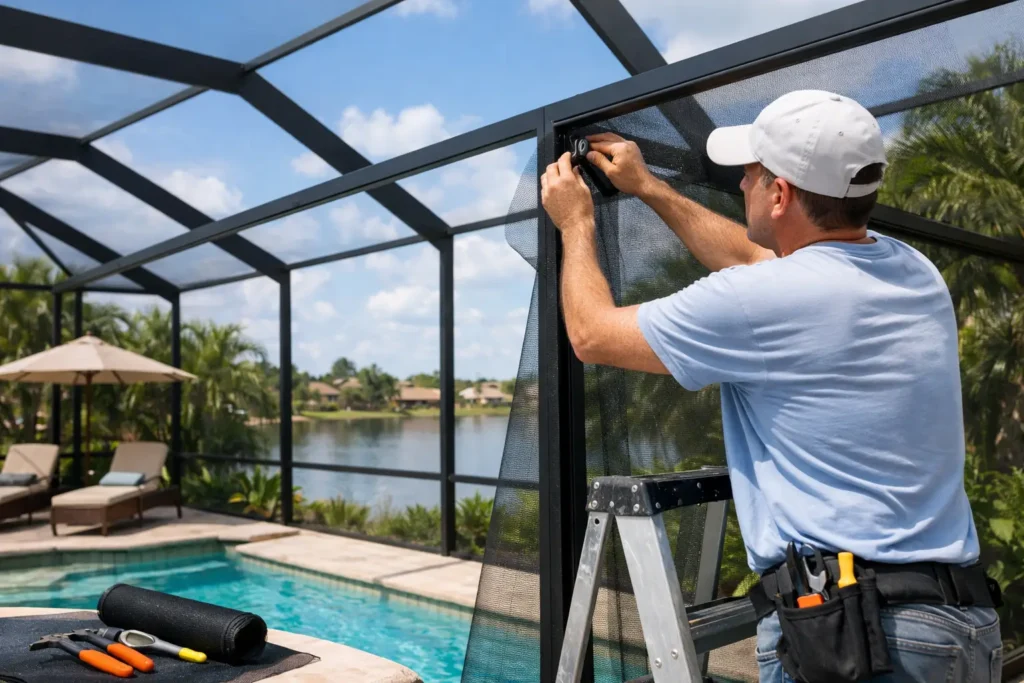
A torn panel may look like a small problem, but in South Florida it can quickly turn a patio into an open invitation for mosquitoes, no-see-ums, leaves, and windblown debris. Timely screen enclosure repair restores the comfort of your outdoor space without automatically requiring a complete rebuild.
For many homeowners, the right solution is targeted: replace damaged mesh, secure loose spline, repair a bent frame section, or address a door that no longer closes tightly. The key is identifying whether the damage is limited to the screen or points to a larger issue with the enclosure structure.
When Screen Enclosure Repair Makes Sense
Screen damage is common around pools, patios, porches, and lanais. Florida sun weakens older mesh over time, while pets, lawn equipment, falling branches, and everyday use can cause isolated tears. If the aluminum frame is straight, firmly anchored, and free of significant corrosion, repairing individual panels is often the most cost-effective path.
A repair is usually a good fit when you see a small hole, a loose or sagging panel, frayed edges near the spline, or a panel that has pulled away from the frame. Replacing one or several panels can restore pest control and improve the appearance of the enclosure without the cost of full rescreening.
Door-related issues also deserve attention. A screen enclosure door that drags, sticks, will not latch, or swings open in the wind can make the entire patio less secure and less convenient. The problem may involve the closer, hinges, latch, handle, frame alignment, or a worn sweep at the bottom of the door. These parts are small, but they affect how well the enclosure performs every day.
Signs the Problem Is Bigger Than a Torn Screen
Not every enclosure issue should be treated as a simple screen replacement. A professional inspection can help separate a repairable panel problem from frame or structural damage that needs a different approach.
Look closely for aluminum members that are bent, loose fasteners, cracked connections, visible corrosion, or posts that appear out of alignment. After a storm, inspect for roof panels that have pulled loose, damaged gutters, and doors that suddenly will not line up with their latches. If multiple panels are brittle, faded, or failing at once, full rescreening may offer better value than replacing them one at a time.
It also depends on the age of the enclosure and the type of mesh already installed. Standard fiberglass screening is a practical choice for many homes, but it may not hold up well where pets frequently lean or scratch against the panels. Heavier pet-resistant mesh can be a better investment in those areas, though it may reduce airflow slightly and costs more than standard material. For pool enclosures where tiny insects are the main concern, a finer mesh may help, with the trade-off of somewhat more restricted airflow and visibility.
The best material is not always the strongest or most expensive option. It should match how your family uses the patio, whether you have pets, how much shade the area receives, and what type of pest pressure you experience around the home.
Why South Florida Enclosures Need Regular Attention
Heat, humidity, salt air in coastal communities, and strong seasonal storms all shorten the life of exterior components. Even a well-built screen enclosure is exposed to constant expansion, contraction, moisture, and wind. Over time, mesh loses tension, spline dries out, fasteners corrode, and doors can become misaligned.
Routine checks help prevent a minor issue from turning into a larger repair. Walk the perimeter of the enclosure a few times each year, especially before and after storm season. Check the lower panels first. They tend to take the most abuse from pets, children, pool equipment, landscaping, and pressure washing.
Avoid pushing hard against screen panels when cleaning. Use a gentle rinse and mild cleaning method rather than aggressive pressure close to the mesh or frame. High pressure can loosen spline, stretch older screen material, and force water into areas where corrosion may already be developing.
If you notice a loose panel, do not wait until it blows out completely. An unsecured edge can create more strain across the surrounding screen and frame during heavy wind. Early service is typically cleaner, faster, and less expensive than addressing widespread damage later.
Choosing Between a Panel Repair and Full Rescreening
Homeowners often ask whether they should repair only the visible damage or rescreen the entire enclosure. There is no single answer, but the condition of the surrounding panels usually tells the story.
A single new panel can stand out against older, sun-faded mesh, especially when the enclosure is several years old. That does not mean a spot repair is wrong. If the remaining panels are still tight and in good condition, replacing only the damaged section makes financial sense. It is a practical fix when the goal is to keep the patio usable and protected.
Full rescreening becomes more attractive when many panels are loose, the mesh feels brittle, several areas have small tears, or the enclosure has an uneven patchwork appearance from past repairs. It also gives you the opportunity to select a mesh better suited to your current needs, such as pet-resistant screening or a finer insect screen.
Ask for a clear recommendation based on what can be repaired safely, what should be replaced soon, and what can reasonably wait. A dependable contractor should explain the condition of the enclosure without pushing a full replacement when a targeted repair will solve the immediate problem.
Professional Screen Enclosure Repair Protects Daily Comfort
A proper repair is about more than placing new mesh into an opening. The screen must be cut accurately, installed with even tension, and secured with the appropriate spline so it stays smooth without being overstretched. Too little tension leads to sagging. Too much can distort the frame or cause the mesh to pull loose prematurely.
Door repairs also require careful adjustment. A door that closes but does not latch securely is not fully repaired. The frame, hinges, closer, latch, and sweep should work together so the door opens easily and closes firmly behind you. This matters when children, pets, and pool traffic move in and out of the patio throughout the day.
For homeowners who need screen work along with sliding patio door, window screen, lock, or track service, it can be useful to have one local specialist assess the related issues. Protech Sliding Doors provides residential repair solutions with a focus on high-quality parts, clear recommendations, and dependable local service across Southeast Florida.
What to Ask Before Scheduling Service
Before booking a repair, take a few photos of the damage and note whether the issue followed a storm, pet damage, pressure washing, or normal wear. This helps the technician understand what may be needed before arriving.
Ask whether the quote includes the screen material, spline, hardware, removal of damaged material, and cleanup. If a door is involved, ask whether the latch, hinges, closer, and alignment will be checked as part of the visit. A free estimate should give you a clear picture of the work rather than leaving important parts of the repair as surprises.
Also be realistic about timing after severe weather. Demand can rise quickly across Fort Lauderdale, Boca Raton, Coral Springs, Pompano Beach, Hollywood, West Palm Beach, and nearby communities after a storm. Scheduling early when you first spot damage can help you restore your outdoor space before the problem gets worse.
A well-maintained enclosure lets you enjoy the breeze, keep pests outside, and make better use of your patio every day. If your screens are torn, sagging, or no longer keeping the space closed off, a professional inspection can help you make a practical repair decision with confidence.